
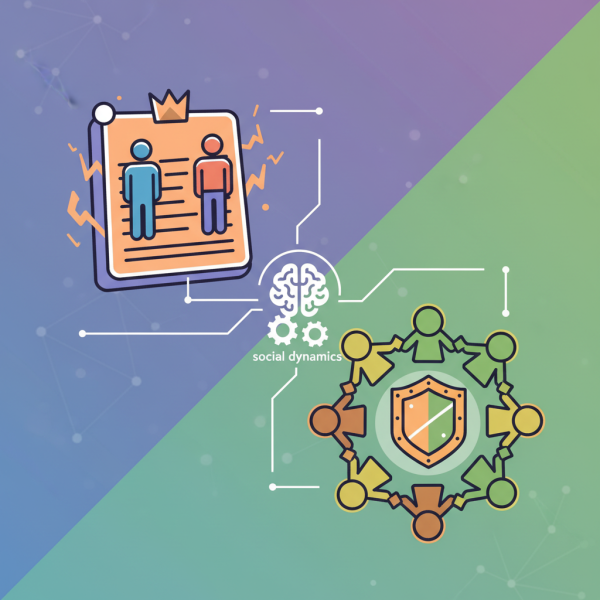
The Interplay of Competition and Cooperation in Game Design
What you'll learn
 Competitive Social FeaturesCooperative Social FeaturesPlayer AccountabilityCommunity Cohesion
A particularly powerful aspect of the relationship between social features and player engagement lies in how competitive and cooperative elements can profoundly influence a player's sense of accountability to a broader community. This article delves into the mechanisms through which these social dynamics foster responsibility, ultimately driving deeper immersion, commitment, and sustained participation within game worlds. For designers and developers, mastering this balance is key to cultivating vibrant, long-lasting player communities.
The Power of Social Dynamics in Games
Social interactions are no longer a peripheral component but a core pillar of modern game experiences. They transform solitary play into shared adventures, adding layers of meaning and motivation that single-player experiences often cannot provide. When players interact with others, whether as allies or rivals, their actions gain a new dimension of consequence and visibility. This visibility is a fundamental precursor to fostering accountability, as players become aware that their contributions, or lack thereof, are noticed by others.
Community building within a game is directly influenced by how players perceive their roles and responsibilities within that community. A strong community thrives on mutual expectations and shared goals, which are often reinforced through well-designed social systems. Without these systems, even the most engaging gameplay loops might struggle to retain players who feel isolated or unattached to the game's social fabric.
Competitive Features and Accountability
Competitive features inherently place players in direct opposition, creating a clear winners and losers scenario. This environment, when designed thoughtfully, can be a potent driver of individual accountability. Players are motivated to perform well not just for personal gain, but also to uphold their reputation within a ranked system or to contribute to their team's standing against rivals. The fear of letting down teammates or publicly underperforming can be a powerful motivator.
Leaderboards, ranking systems, and competitive leagues are classic examples. A player's position on a leaderboard directly reflects their effort and skill, making them accountable for their performance. Similarly, in competitive team-based games, individual actions have direct consequences for the entire team's success or failure. This external pressure often translates into an internal drive for improvement and adherence to gameplay standards.
- Ranked Play Systems: Players are accountable for their individual skill and contribution to their rank, which impacts their standing in the community.
- Leaderboards: Public display of performance metrics encourages players to strive for higher positions, making their efforts visible and subject to comparison.
- Player-vs-Player (PvP) Arenas: Direct confrontation where individual skill and strategic choices are immediately tested, fostering accountability for one's actions in battle.
- Faction Wars: Contributing to a larger group's competitive effort against another faction, where personal participation directly affects the overall outcome.
Cooperative Features and Shared Responsibility
On the other side of the spectrum, cooperative features focus on collaboration towards a common goal. Here, accountability shifts from individual performance against others to shared responsibility for collective success. Players rely on each other, creating a social contract where each member's contribution is vital. Failing to contribute means potentially letting down an entire group, which can be a much stronger social deterrent than simply failing alone.
Guilds, raids, team-based objectives, and shared world events are prime examples of cooperative structures. In a raid, for instance, each player often has a specific role, and a single player's failure to execute their role can jeopardize the entire group's progress. This interdependence cultivates a strong sense of obligation and commitment, as players learn to depend on and be dependable for their teammates.
- Guild/Clan Systems: Players are accountable to their guildmates for participation, resource contribution, and representing the guild's reputation.
- Raid/Dungeon Groups: Success often hinges on each player fulfilling their specific role, fostering acute responsibility to the group's collective objective.
- Team-Based Objectives: Completing shared tasks requires synchronized effort, making each player responsible for their part in achieving the objective.
- Mentorship Programs: Experienced players are accountable for guiding and supporting newer players, strengthening community bonds and shared knowledge.
The Synergistic Balance: Competition and Cooperation
The most compelling systems often blend competitive and cooperative elements to create a nuanced sense of accountability. Consider guilds that compete against other guilds in seasonal events or cooperative challenges with global leaderboards. Here, players are accountable to their immediate cooperative group (their guild) but also to the larger competitive landscape. Their individual contributions fuel both the internal cohesion of their team and their team's external standing.
This synergy can amplify engagement significantly. Players are not just striving for personal bests or helping friends; they are doing both simultaneously, often with greater stakes. However, designers must be wary of potential downsides. An unhealthy balance can lead to toxicity, burnout, or exclusion if competitive pressure overshadows cooperative support, or if cooperative demands become overly burdensome without adequate reward.
Careful implementation ensures that competitive failures don't permanently sideline players, and that cooperative demands don't feel like a chore. Providing avenues for both casual and hardcore engagement within these blended systems helps maintain a broad player base.
Designing for Impact: Strategies for Developers
To effectively harness competitive and cooperative social features for accountability, developers should focus on several key design principles:
- Clear Goals and Expectations: Players need to understand what is expected of them, both individually and as part of a group.
- Visible Consequences: Whether positive (rewards, recognition) or negative (loss of rank, group failure), the outcomes of player actions must be transparent.
- Positive Reinforcement: Acknowledge and reward responsible behavior and meaningful contributions to reinforce desired accountability.
- Mitigate Toxicity: Implement reporting tools, moderation, and social systems that encourage positive interaction and discourage detrimental behavior.
- Provide Social Tools: Easy-to-use communication, grouping, and guild management tools are essential for social features to flourish.
- Iterative Design: Continuously monitor player behavior and community sentiment, adjusting features to optimize for engagement and healthy accountability.
Summary
The role of competitive and cooperative social features in cultivating player accountability is undeniable, offering powerful avenues for enhancing user engagement and fostering robust game communities. Competitive elements, such as ranked play and leaderboards, drive individual responsibility through visible performance and reputational stakes. Cooperative features, like guilds and raids, foster shared accountability and interdependence, making players responsible for collective success. When thoughtfully combined, these dynamics create a potent synergy that deepens player commitment, though careful design is required to prevent negative outcomes. By focusing on clear expectations, visible consequences, positive reinforcement, and toxicity mitigation, game designers can effectively leverage these social mechanisms to build truly engaging and enduring virtual worlds.
Comprehension questions
 How do competitive features encourage player accountability within a game's community?What mechanisms can cooperative features employ to strengthen a player's sense of responsibility to their team or guild?In what ways can both competitive and cooperative elements, when combined, enhance long-term player commitment?Why is it important for game designers to carefully balance competitive and cooperative features to avoid negative community dynamics?