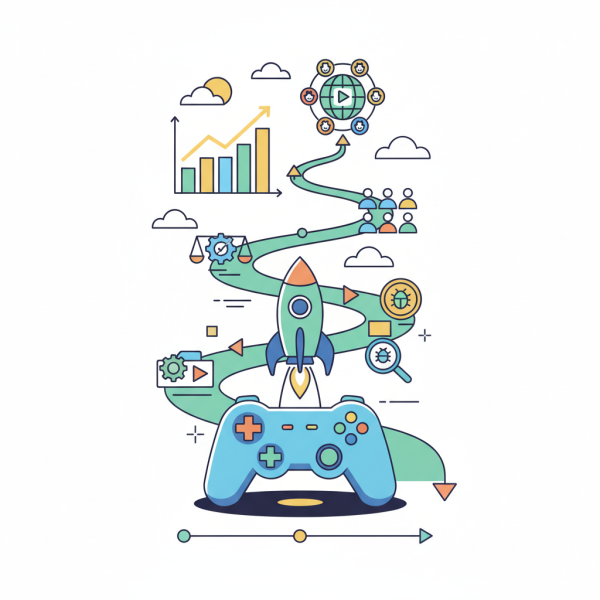
Mastering Live Service Games
Course Details
Running a successful video game in today's dynamic market often extends far beyond its initial launch. The era of 'ship it and forget it' has largely given way to the live service model, where games evolve continually, providing ongoing engagement and value to players. This paradigm shift demands a different mindset from developers and designers, focusing on long-term sustainability, player retention, and continuous improvement. Understanding the intricacies of live operations is no longer a niche skill but a fundamental requirement for studios aiming to thrive.
At its core, Live Operations – or Live Ops – encompasses all the activities involved in operating and maintaining a game post-launch. This includes everything from deploying regular content updates, balancing gameplay mechanics, and fixing bugs, to managing in-game economies and fostering a healthy player community. It's an iterative process driven by data and player feedback, designed to keep the game fresh, engaging, and relevant. Without effective live ops, even the most innovative game can quickly lose its audience and revenue potential.
Designing for a live service product requires foresight and a proactive approach. It involves building systems that are adaptable and extensible, allowing for seamless integration of new content and features without disrupting the core experience. This includes architecting for data collection from day one, enabling informed decision-making based on player behavior, and establishing robust pipelines for deployment. Furthermore, it means cultivating a deep understanding of player psychology and motivation to craft experiences that encourage long-term participation and loyalty.
Are you ready to transform your understanding of game development from a one-time release to a continuous journey of engagement and evolution? Join us in this comprehensive course designed for game designers and developers eager to master the art and science of running a game as a live service product, equipping you with the knowledge and tools to navigate the complexities of modern game operations and build lasting player communities.
Course Contents (11 lessons)
- 1.
 A comprehensive exploration of the live service model highlights its fundamental principles, benefits for both developers and players, and the sustained engagement it fosters in the modern gaming landscape.
 - 2.
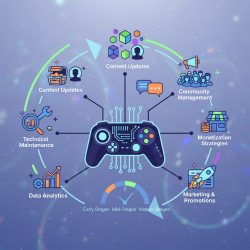 Live operations are the ongoing strategic and tactical efforts crucial for maintaining, evolving, and monetizing a game after its release, significantly influencing player engagement and long-term success.
 - 3.
 Uncover essential strategies for developing and scheduling continuous game content, encompassing regular updates, events, and new features, to sustain player engagement.
 - 4.
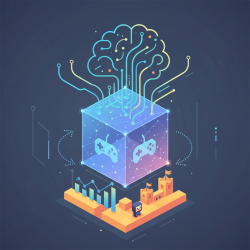 Integrating robust analytics from the start empowers game developers to track player behavior, optimize gameplay, and make data-driven decisions for more engaging titles.
 - 5.
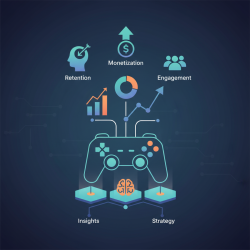 Identifying key performance indicators and interpreting game data effectively is crucial for assessing game health, optimizing player engagement, and making informed decisions.
 - 6.
 This article illuminates the essential role of community managers and details effective strategies for building, engaging, and maintaining a positive, loyal player base in online environments.
 - 7.
 This article explores the diverse and evolving monetization strategies, including battle passes, in-app purchases, and subscriptions, crucial for sustaining live service games.
 - 8.
 Clear incident response and crisis management are vital for preparing for unexpected issues, server outages, and community backlashes, ensuring resilience and trust.
 - 9.
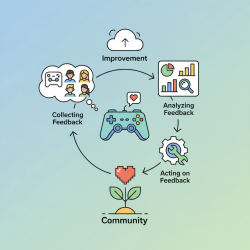 Efficient player feedback loops are essential for collecting, analyzing, and acting upon player insights, driving continuous game improvement, enhancing engagement, and fostering a strong community.
 - 10.
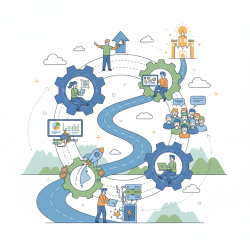 Assembling an effective Live Ops team requires defining pivotal roles, cultivating essential skills, and implementing strategic operations to ensure sustained product success.
 - 11.
 The future of live service games is shaped by emerging technological trends, a greater focus on community-driven development, and the ongoing challenge of maintaining player engagement over extended periods.