The Power of Player Feedback Loops for Iterative Improvements
- -->> 9. The Power of Player Feedback Loops for Iterative Improvements
What you'll learn
 Collecting FeedbackAnalyzing Player DataImplementing ChangesCommunity Engagement
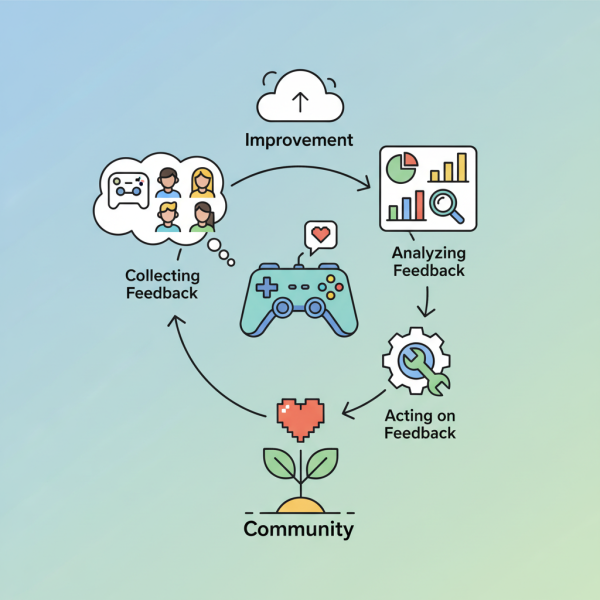
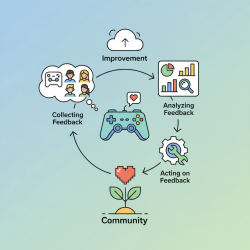
Player feedback is the lifeblood of game development, transforming a static product into an evolving experience. Establishing robust player feedback loops is not merely about listening to your audience; it's about creating efficient systems for collecting, analyzing, and acting upon that feedback to improve the game iteratively. This continuous dialogue between developers and players fosters stronger communities, enhances engagement, and ultimately leads to a more successful and beloved game.
Why Player Feedback Matters
Game development is an intricate process, and even the most seasoned designers can overlook subtle nuances that impact player experience. Feedback provides an invaluable external perspective, highlighting areas of friction, unexpected emergent gameplay, and opportunities for innovation. It's crucial for:
- Iterative Improvement: Games are never truly "finished"; they evolve. Feedback fuels this evolution.
- Player Retention: Players feel heard and valued, increasing loyalty.
- Bug Identification: Uncovering issues that internal QA might miss.
- Feature Validation: Confirming if new features resonate with the target audience.
- Community Building: Engaging players makes them feel like collaborators.
Collecting Feedback Efficiently
The first step in any effective feedback loop is to gather data systematically. Diverse collection methods cast a wide net, ensuring a comprehensive understanding of player sentiment.
In-game surveys provide timely and context-specific questions that can yield highly relevant data, often tied to specific features or gameplay moments. Forums and social media platforms like Reddit and Discord offer organic discussions, providing raw, unfiltered opinions and highlighting trending topics. Dedicated bug reporting tools allow players to report technical issues directly, often including necessary diagnostic information.
Playtests and usability labs, both internal and external, offer controlled environments to observe player behavior and gather direct verbal feedback. Community managers act as vital conduits, summarizing discussions and surfacing critical concerns from the community to the development team. Furthermore, analytics and telemetry provide quantitative data on player behavior, such as progression rates, feature usage, and drop-off points, which complements qualitative feedback by showing what players do rather than just what they say.
It's important to make feedback submission easy and accessible for players, reducing friction and encouraging participation. Clearly communicate where and how players can share their thoughts.
Analyzing Feedback Effectively
Raw feedback, while valuable, can be overwhelming. Effective analysis transforms a deluge of data into actionable insights.
Categorization involves organizing feedback into themes like "bug reports," "gameplay suggestions," "UI/UX issues," "balance concerns," and "new feature requests." Sub-categories further refine this process. Prioritization is crucial, as not all feedback holds equal weight. Factors to consider include its impact on core gameplay or player experience, the frequency of occurrence (how many players are reporting it), the feasibility of implementation given resources, and its alignment with the game's overarching vision.
Sentiment analysis helps understand the emotional tone of the feedback – whether it's positive, negative, neutral, or constructive criticism. It's also vital to correlate qualitative feedback with quantitative analytics. For example, if many players complain about a difficult level, telemetry data might confirm a high player drop-off rate at that specific point. Identifying trends means looking for recurring patterns and common pain points across different feedback channels. A single player's complaint might be an anomaly, but dozens of players reporting the same issue signifies a critical trend.
Acting on Feedback
Collecting and analyzing feedback is pointless without action. This stage closes the loop, demonstrating to players that their input genuinely matters.
Once feedback is analyzed and prioritized, implementation planning integrates it into the development roadmap, involving design adjustments, bug fixes, or new feature development. Resource allocation ensures that the necessary development resources, including time, personnel, and budget, are assigned to address the prioritized feedback. Implemented changes must undergo thorough testing and validation to ensure they effectively address the original feedback and do not introduce new issues; sometimes, this necessitates a second round of playtesting with the community.
Communication is a critical, often overlooked, part of the loop. Transparency means clearly communicating what feedback was received, what actions are being taken, and why certain decisions were made. Regular updates inform players about progress on known issues or upcoming features inspired by their suggestions. Finally, acknowledging player contributions publicly with a "thank you" reinforces their value and encourages continued participation.
Building a Culture of Feedback
A truly efficient feedback system thrives within a development culture that genuinely values player input. This means fostering developer empathy, encouraging team members to actively engage with community discussions and understand player perspectives firsthand. It requires open-mindedness, where internal assumptions are challenged based on compelling player feedback. Dedicated resources, allocating specific team members or roles to manage feedback collection, analysis, and communication, are also essential. Furthermore, continuous learning treats each feedback loop as an opportunity to refine the feedback process itself.
Summary
Establishing efficient player feedback loops is indispensable for iterative game improvement. This involves systematically collecting insights through various channels, meticulously analyzing diverse data points to identify actionable trends, and decisively acting upon this intelligence by integrating changes into development. Crucially, transparent communication back to the player base validates their contributions, fosters a strong community, and drives continuous enhancement, ensuring the game evolves in ways that resonate deeply with its audience.
Comprehension questions
 What are the key benefits of establishing robust player feedback loops in game development?Name three efficient methods for collecting player feedback mentioned in the article.What factors should be considered when prioritizing player feedback for implementation?Why is transparent communication back to the player base a critical part of the feedback loop?
Review Quiz
Next Lesson
Course Contents : Mastering Live Service Games
- >> 9.
 The Power of Player Feedback Loops for Iterative Improvements