Empowering Game Development and Design with Analytics
- -->> 4. Empowering Game Development and Design with Analytics
What you'll learn
 Data StrategyAnalytics IntegrationPlayer BehaviorIterative Design
Modern game design demands a scientific approach, one that leverages concrete evidence to sculpt engaging and resonant player experiences. This is where "Designing for Data" comes into play – a philosophy and practice that advocates for integrating robust analytics from the very inception of a game project. By embedding tracking mechanisms from the ground up, developers can gain invaluable insights into player behavior, ultimately informing design decisions and fostering a continuous cycle of improvement that leads to more compelling and successful titles.
The Paradigm Shift: From Intuition to Data
Historically, game design often relied heavily on the experience and gut feelings of designers. While artistic vision remains paramount, the complexity of modern games and the diversity of player bases make it challenging to predict outcomes without empirical evidence. Data provides that evidence, transforming design from an art form guided solely by inspiration into a more precise craft informed by quantitative understanding.
This shift isn't about stifling creativity; rather, it's about empowering it with knowledge. Data doesn't tell you what to design, but it shows you how players interact with what you've designed. It highlights pain points, uncovers unexpected player journeys, and validates successful mechanics, allowing designers to iterate with confidence and precision.
Defining Your Data Strategy
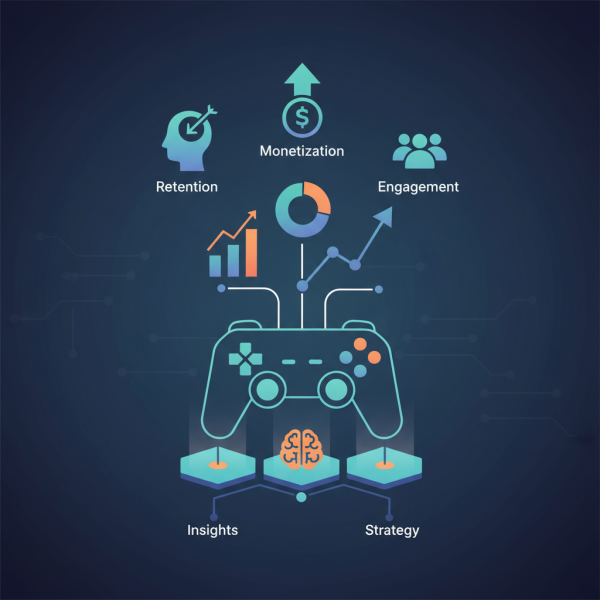
Before implementing any tracking, a clear data strategy is essential. This involves defining what questions you want to answer about your players and your game. What aspects of player behavior are critical to understanding engagement, retention, and monetization? A well-defined strategy ensures that the data collected is relevant and actionable, avoiding the pitfall of "collecting everything" without purpose.
What to Track
Consider the core loops of your game. Every significant player action, decision, or progression point is a potential data point. Think about user acquisition, tutorial completion rates, feature usage, resource management, combat encounters, social interactions, and even error rates. Each piece of information can paint a clearer picture of the player experience.
Key Metrics Examples
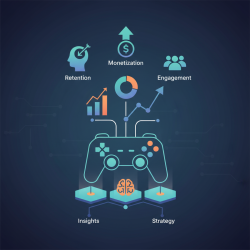
- Engagement Metrics: Session length, daily active users (DAU), weekly active users (WAU), time spent in specific game modes or areas.
- Retention Metrics: Day 1, Day 7, Day 30 retention rates, churn rate, progression through game levels or story.
- Monetization Metrics: Average revenue per user (ARPU), conversion rates for in-app purchases, lifetime value (LTV) of players.
- Usability Metrics: Tutorial completion rates, time to understand new mechanics, navigation paths, frequency of specific UI interactions.
- Performance Metrics: Load times, frame rate drops, crash rates, server latency.
Integrating Analytics Early
The "ground up" approach means embedding telemetry and tracking hooks into the game engine and design from the very first prototypes. Retrofitting analytics later can be significantly more difficult, costly, and less comprehensive. Early integration allows designers to test hypotheses about player behavior even during early playtests, shaping core mechanics before they become entrenched.
This proactive integration ensures that data collection is a natural extension of the development process, not an afterthought. It also fosters a data-aware culture within the development team, where insights are regularly reviewed and discussed across all disciplines, from design and engineering to marketing and art.
Choosing the Right Tools and Technology
A plethora of analytics tools exists, ranging from off-the-shelf solutions specifically designed for games to custom-built internal systems. The choice depends on your budget, team expertise, scale, and specific data needs. Key considerations include ease of integration, real-time reporting capabilities, data visualization options, scalability, and compliance with data privacy regulations.
Regardless of the tool, ensure it can handle the volume of data your game is likely to generate and provides an intuitive interface for analysis. Custom events and parameters are often crucial for capturing game-specific nuances that generic analytics might miss.
Actioning Insights: The Feedback Loop
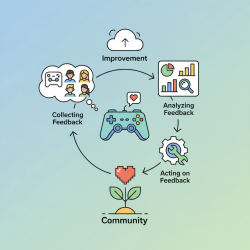
Collecting data is only half the battle; the real value lies in acting upon it. Data analysis should lead to actionable insights that directly inform design iterations. This often involves cross-functional teams collaborating to understand the "why" behind the numbers. For instance, low retention might indicate a difficulty spike, while high usage of a specific weapon might suggest it's overpowered.
Iterative Design Process
- Hypothesize: Formulate a specific question or assumption about player behavior.
- Instrument: Implement tracking to collect relevant data.
- Analyze: Interpret the collected data to identify patterns and insights.
- Design Change: Propose and implement a design adjustment based on the insight.
- Measure: Track the impact of the change to validate its effectiveness.
This iterative loop ensures that design decisions are continuously validated and refined, maximizing the game's potential for player satisfaction and business success.
Ethical Considerations and Privacy
With great data comes great responsibility. Developers must prioritize player privacy and adhere to relevant data protection regulations such as GDPR or CCPA. Transparency with players about what data is collected and how it's used is paramount for building trust. Data should always be anonymized or aggregated where possible, and never used in a way that exploits players or compromises their personal information.
Ethical data collection builds a sustainable relationship with your player base, demonstrating respect for their privacy while still benefiting from the insights needed to improve the game experience.
Summary
Designing for data is a fundamental shift in modern game development, moving beyond pure intuition to embrace a data-informed approach. By strategically defining what to track, integrating analytics early in the development cycle, choosing appropriate tools, and establishing a clear feedback loop for actioning insights, developers can continuously refine and enhance their games. This practice, combined with a strong commitment to ethical data handling and player privacy, leads to more engaging, successful, and sustainable gaming experiences for everyone involved.
Comprehension questions
 Why is integrating analytics from the ground up crucial in modern game development?What are some key considerations when defining a data strategy for a game?How can game developers ensure that data insights are effectively actioned into design changes?What ethical responsibilities do developers have when collecting and using player data?
Community Poll
Next Lesson
Course Contents : Mastering Live Service Games
- >> 4.
 Empowering Game Development and Design with Analytics