Fundamentals of Level Curve Design
What you'll learn
 Designing In Game ProgressionExample Level Curve FormulasDifferent Level Curve Types
Course Details
A well-designed level curve is crucial in video game design because it directly impacts player engagement and retention. A healthy curve ensures the game's difficulty scales in a way that feels fair and rewarding. If the curve is too steep, players may feel overwhelmed and frustrated, leading them to abandon the game. Conversely, if the curve is too flat, players might get bored and lose interest due to a lack of challenge. By finding the right balance, designers can create a sense of accomplishment that motivates players to continue their journey, fostering a deeper connection to the game.
The importance of a healthy level curve also extends to the player's emotional journey and skill development. It acts as a guide, teaching new mechanics and building on learned skills in a structured manner. This progression makes the player feel competent and powerful, as they can overcome increasingly difficult obstacles with the tools and abilities they've acquired. Without this thoughtful progression, the game can feel random or unfair, undermining the player's sense of agency and making the experience feel less like a skill-based challenge and more like a series of frustrating setbacks.
In this course we will cover the fundamentals of desiging a level curve, while also providing examples of several different level curve styles to use within your game. Also don't forget to try out our free level curve designer tool.
Course Contents (6 lessons)
- 1.
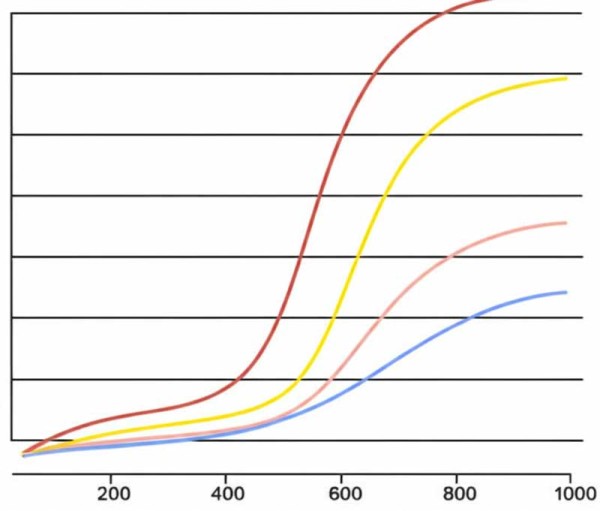
 A level curve is a function that maps a player's experience points (XP) to their character level. It's the engine that drives a player's journey from novice to master.
 - 2.
 A level curve formula serves as a predictable and scalable method for determining the XP thresholds for each level in a game. Instead of manually setting arbitrary XP values for each of the potentially hundreds of levels in a modern RPG or MMO, designers utilize an equation that automatically calculates these values based on a few key parameters.
 - 3.
 The careful orchestration of difficulty is paramount to crafting an engaging and rewarding video game experience. Too easy, and players become bored and disengaged. Too hard, and frustration sets in, leading to abandonment.
 - 4.
 The ramp up curve, flat curve, brick wall curve, and exponential curve represent distinct approaches to managing the player's challenge, each with its own implications for player engagement and overall game feel. Understanding these specific curve types is essential for developers aiming to fine-tune the difficulty and create an experience that resonates with their target audience.
 - 6.
 Let's test your knowledge and see what you have learned related to level curve design within video games.