
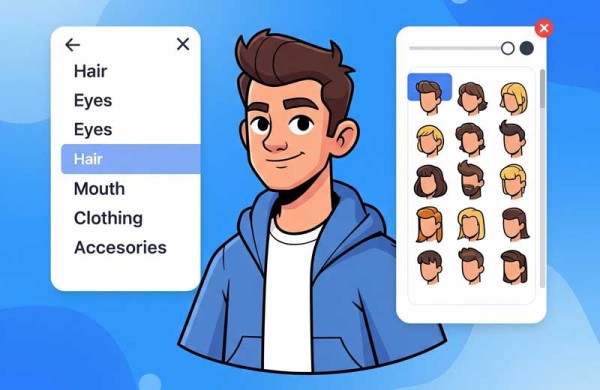
Designing Identity: The Mechanics of Avatar Customization Systems
What you'll learn
 Core Components of an Avatar Design SystemCustomization Engine ArchitectureChallenges in Designing a Customization EngineIn-Game Benefits of Advanced Avatar Systems
Player avatars are more than just in-game representations; they are critical extensions of player identity and a powerful tool for immersion in virtual worlds. For video game designers and developers, understanding the intricacies of an avatar design system is fundamental to creating compelling and engaging player experiences. This article will delve into the core mechanics of how a basic avatar customization engine functions, explore the significant challenges inherent in its design and implementation, and highlight the numerous in-game benefits that a robust system offers to both players and developers.
Core Components of an Avatar Design System
At its heart, an avatar design system relies on a modular approach, combining various digital assets to construct a unique character. The foundation typically begins with a base mesh and a shared skeletal rig, which dictates the character’s overall proportions and animation capabilities. This base serves as the canvas upon which all customization options are applied.
Individual customization elements are usually categorized into distinct modules. These can include:
- Head and Facial Features: Hair styles, eyebrows, eyes, noses, mouths, and ears, often implemented as separate meshes or blend shapes affecting the base head model.
- Body Parts: Arms, legs, torso, which might be interchangeable or subject to scaling and proportion adjustments.
- Clothing and Armor: Layered garments, accessories, and gear designed to fit the base body, often requiring careful consideration of attachment points and potential clipping.
- Material and Texture Customization: Options for changing skin tones, hair colors, eye colors, and clothing patterns or material properties, usually achieved through dynamic material instancing and color palettes.
These modules are designed to be interchangeable, allowing for a vast number of combinations. The system then processes these selected components, assembling them into a coherent 3D model that adheres to the shared animation rig, ensuring that the final avatar can perform all necessary in-game animations seamlessly.
The Technical Backbone: Customization Engine Architecture
The engineering behind an avatar customization engine is a complex endeavor, requiring sophisticated data management and rendering techniques. Typically, the system operates on a data-driven paradigm, where player choices are stored as a set of parameters or references to specific asset IDs rather than unique pre-rendered models. This approach ensures efficiency and flexibility.
Key architectural considerations include:
- Asset Management: An efficient system for loading, unloading, and managing the potentially thousands of individual modular assets. This often involves asset atlasing to reduce draw calls and memory footprint, and Level of Detail (LOD) systems to optimize rendering performance based on distance from the camera.
- Blend Shapes and Morph Targets: For subtle, continuous variations like facial expressions or body musculature, blend shapes (or morph targets) are crucial. These allow developers to define multiple target shapes for a mesh and then interpolate between them using sliders in the UI, avoiding the need for countless separate meshes.
- Skeletal Scaling and Proportion Adjustments: To allow for variations in character height, build, or limb length, the underlying skeleton's bones can be scaled or repositioned. This requires careful inverse kinematics (IK) and animation retargeting to ensure animations remain natural and free from distortion.
- Runtime Assembly: The engine must dynamically assemble the chosen components at runtime, applying textures, materials, and blend shape values. This process needs to be highly optimized to prevent hitches or loading screens every time an avatar is generated or modified.
The interaction of these systems determines the responsiveness and visual fidelity of the customization process, directly impacting the player's experience.
Challenges in Designing a Robust Customization Engine
Developing a comprehensive avatar customization engine is fraught with technical and artistic challenges. One of the most significant hurdles is managing the sheer volume and combinatorial complexity of art assets. Each hair style, piece of clothing, or facial feature must be designed to be compatible with every other element, leading to an exponential increase in potential issues.
Clipping and Interpenetration are pervasive problems. When different modular assets are combined, parts of one mesh might poke through another (e.g., hair through a hat, clothing through the body). Solutions range from careful 3D modeling and rigging with blend shapes to more complex runtime collision detection and dynamic mesh adjustments or shader-based masking techniques. However, these solutions add significant development time and computational overhead.
Performance optimization is another critical concern. Displaying a highly customized avatar, especially in a multiplayer environment where many unique characters are rendered simultaneously, can be a major drain on system resources. Developers must balance visual fidelity with efficient rendering, often employing techniques like texture atlasing, instancing, and aggressive LODs without sacrificing the unique appearance of each character.
Furthermore, the User Interface (UI) and User Experience (UX) for customization can be incredibly challenging to design. Providing a vast array of options in an intuitive and accessible manner requires careful planning. Players need clear visual feedback, efficient navigation, and the ability to preview changes instantly, all while avoiding overwhelming them with too many choices at once.
Finally, scalability and maintainability are long-term concerns. As games evolve and new content is added, the customization system must be able to seamlessly integrate new assets and options without breaking existing ones or introducing new bugs. This demands a flexible and well-documented architecture from the outset.
In-Game Benefits of Advanced Avatar Systems
Despite the considerable challenges, the benefits of implementing a sophisticated avatar customization system are profound, enriching the player experience and offering significant strategic advantages for game developers.
Primarily, an effective avatar system fosters a deep sense of player agency and immersion. When players can craft a character that truly reflects their identity, preferences, or desired role-playing fantasy, they become more emotionally invested in the game world and its narrative. This personal connection significantly enhances the overall enjoyment and willingness to engage with game content.
In multiplayer games, avatar customization serves as a powerful tool for social expression and recognition. Players can stand out from the crowd, communicate aspects of their personality, or proudly display achievements through unique cosmetic choices. This social aspect contributes to a vibrant community and encourages interaction among players.
From a commercial standpoint, avatar customization opens up robust monetization opportunities. The ability to sell cosmetic items – new outfits, hairstyles, accessories, or even unique animation sets – provides a sustainable revenue stream, particularly in free-to-play titles. These offerings allow players to further personalize their experience while supporting the ongoing development of the game.
Moreover, a rich customization engine can contribute to replayability. Players might be incentivized to start new playthroughs just to try different character builds or aesthetic themes. It also allows for greater accessibility, letting players create avatars that more accurately represent themselves or diverse populations, fostering a more inclusive gaming environment.
Summary
In conclusion, avatar design systems are intricate yet indispensable components of modern video games, serving as a bridge between player identity and the digital realm. These systems function by assembling modular art assets on a shared skeletal rig, driven by complex data structures and advanced rendering techniques like blend shapes and dynamic material instancing. While their development presents formidable challenges, including managing asset compatibility, preventing visual clipping, optimizing performance, and crafting intuitive user interfaces, the strategic advantages are clear. A well-executed avatar customization engine dramatically enhances player immersion, fosters social expression, provides valuable monetization avenues, and contributes to the overall longevity and appeal of a game. For designers and developers, mastering these systems is key to creating truly resonant and personalized virtual experiences.
Comprehension questions
 What are the three primary types of modular assets commonly used in a basic avatar design system?Explain the purpose of blend shapes (or morph targets) in avatar customization and how they contribute to flexibility.Name at least three significant technical and artistic challenges encountered when designing a robust avatar customization engine.Beyond player immersion, what are two key in-game benefits that advanced avatar systems provide to game developers and the player community?