
How To Improve Game Retention and Player Engagement
What you'll learn
 Retention Metrics AnalysisOnboarding OptimizationCore Loop EngagementLong-Term Player Loyalty
The true measure of a game's success often lies in its ability to keep players engaged over time. Understanding and actively improving your game's retention rates is paramount for long-term viability, community building, and ultimately, profitability. This guide will delve into the critical retention benchmarks of Day 1, Day 7, and Day 30, offering insights into identifying player drop-off points and implementing effective strategies to transform friction into lasting engagement.
Understanding Key Retention Metrics
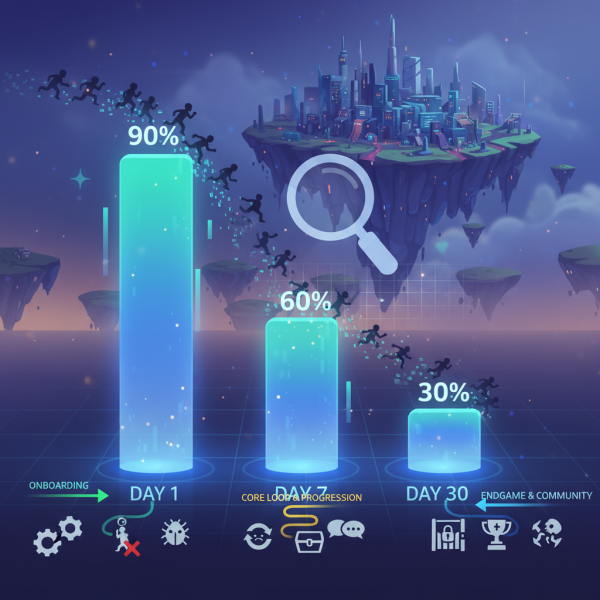
Retention refers to the percentage of players who return to your game after a specific period. It’s a direct indicator of how much players enjoy and value your experience. While countless metrics exist, Day 1 (D1), Day 7 (D7), and Day 30 (D30) retention rates serve as industry-standard benchmarks for good reason. They capture different stages of a player's journey, from their initial impression to their sustained commitment.
- Day 1 Retention: Measures the percentage of new players who return the day after their first session. It's a barometer for the game's initial appeal and onboarding experience.
- Day 7 Retention: Tracks players returning one week after their first session. This metric highlights the strength of your core gameplay loop and early progression systems.
- Day 30 Retention: Indicates the percentage of players still active one month after their first session. This is a strong indicator of long-term engagement, content depth, and community value.
Each drop-off point at these intervals tells a unique story about player experience and where your game might be losing its grip. Analyzing these metrics isn't just about numbers; it's about understanding player psychology and design efficacy.
Decoding Day 1 Retention: The First Impression
A low Day 1 retention rate is a red flag signaling issues with the very first touchpoints a player experiences. This could be anything from technical problems to a confusing tutorial or a lack of immediate gratification.
Common Day 1 Friction Points:
- Overwhelming Onboarding: Too much information, too many mechanics introduced at once.
- Performance Issues: Crashes, bugs, lag, or poor optimization on various devices.
- Lack of Clear Goal/Motivation: Players don't understand "why" they should keep playing.
- Unrewarding Early Experience: No immediate sense of progress or fun.
- Accessibility Barriers: Complex controls, tiny UI, or lack of customization options.
Strategies to Improve Day 1 Retention:
Focus on creating a seamless, engaging, and rewarding first-time user experience. Streamline your tutorial, allowing players to learn by doing rather than by reading long text blocks. Ensure your game runs smoothly across target platforms. Provide early, tangible rewards and a clear sense of progression. Make the initial gameplay loop immediately gratifying and easy to grasp, giving players a taste of the core fun quickly.
Sustaining Engagement: Analyzing Day 7 Retention
Players who return for Day 7 have likely overcome the initial hurdles, but their continued presence hinges on the depth and evolving nature of your game. A drop here suggests that the core loop, while initially captivating, might not be varied or rewarding enough to sustain interest for a full week.
Common Day 7 Friction Points:
- Repetitive Core Loop: Gameplay feels stale, lacking variety or new challenges.
- Slow or Unclear Progression: Players feel stuck or don't see a path forward.
- Lack of Social Interaction: For multiplayer games, absence of meaningful connections.
- Content Drought: Players quickly consume available content and have nothing new to do.
- Monetization Friction: Aggressive or unfair monetization practices disrupting gameplay.
Strategies to Improve Day 7 Retention:
Introduce new mechanics, game modes, or content updates to keep the experience fresh. Design robust progression systems that offer meaningful short-term and long-term goals. Integrate social features like guilds, leaderboards, or cooperative play to foster community. Implement a content roadmap that ensures a steady stream of new experiences. Review your monetization strategy to ensure it enhances rather than hinders enjoyment, offering value without coercion.
Fostering Long-Term Loyalty: Investigating Day 30 Retention
Achieving strong Day 30 retention signifies that your game has successfully transformed casual players into committed enthusiasts. A drop at this stage often indicates a depletion of long-term goals, a lack of strong community ties, or an inability to adapt to evolving player expectations.
Common Day 30 Friction Points:
- Lack of Endgame Content: Nothing left to do once the main progression is complete.
- Stagnant Meta: Lack of balance changes or new strategies to explore in competitive games.
- Weak Community: Players feel isolated or unsupported by fellow players or developers.
- Perceived Pay-to-Win: Monetization systems that heavily favor paying players, alienating free-to-play users.
- Neglected Player Feedback: Players feel their concerns and suggestions are ignored.
Strategies to Improve Day 30 Retention:
Develop comprehensive endgame content such as seasonal events, high-level challenges, or competitive leagues. Foster a strong and positive community through forums, Discord servers, and in-game communication tools. Regularly update the game with balance patches, new features, and quality-of-life improvements. Implement fair and rewarding monetization strategies that offer optional enhancements without creating an unfair advantage. Actively listen to and incorporate player feedback, demonstrating that their input shapes the game's future.
Practical Tools and Methodologies for Analysis and Improvement
Improving retention is an ongoing, data-driven process. Leveraging the right tools and methodologies is crucial for success.
- Analytics Dashboards: Utilize tools like Unity Analytics, GameAnalytics, or custom solutions to track D1, D7, D30 retention, conversion rates, and player behavior funnels.
- A/B Testing: Systematically test different versions of features, tutorials, or UI elements to determine which performs best in terms of retention.
- User Surveys and Feedback Channels: Directly ask players about their experiences, pain points, and desires. In-game surveys, community forums, and social media are invaluable.
- Playtesting and User Research: Observe players interacting with your game, especially new players, to identify areas of confusion or frustration that analytics alone might miss.
Summary
Mastering game retention is not a one-time fix but a continuous cycle of analysis, iteration, and improvement. By meticulously analyzing Day 1, Day 7, and Day 30 retention data, game designers and developers can pinpoint critical drop-off moments and implement targeted solutions. From optimizing the initial onboarding experience to providing deep, engaging endgame content and fostering a thriving community, understanding these benchmarks allows for data-informed decisions that build lasting player loyalty and ensure the long-term success of your game.
Comprehension questions
 What do Day 1, Day 7, and Day 30 retention rates each signify about a player's journey in a game?List three common friction points that can lead to low Day 1 retention and suggest a strategy to address one of them.How can game developers improve Day 7 retention when players start experiencing core loop fatigue or content drought?What methods can be used to gather data and feedback for improving retention, beyond just looking at retention percentages?