

Why Leveling-Up is Core to Player Progression and Accomplishment
What you'll learn
 Psychological Foundations of ProgressionMechanics of Leveling-UpFostering Player Engagement and RetentionDesigning Effective Progression SystemsBeyond Numbers: Narrative and Immersion
The Psychological Foundations of Progression
The human brain is wired for progress and reward. Leveling-up taps directly into this innate desire, providing a clear, quantifiable metric of a player's investment and improvement. Each level gained, each new ability unlocked, triggers a release of dopamine, reinforcing the player's actions and encouraging continued engagement. This positive feedback loop is a core mechanism for habit formation in gaming.
A sense of mastery and competence is profoundly tied to progression. As players overcome challenges and earn rewards, they feel more skilled and capable within the game world. This feeling of empowerment is critical for enjoyment and reduces frustration, transforming potential obstacles into opportunities for growth.
Furthermore, leveling-up provides a structured goal-setting framework. Whether the goal is to reach the next character level, unlock a specific skill, or equip a powerful piece of gear, these incremental objectives keep players motivated. The journey towards these goals, punctuated by mini-rewards, prevents players from feeling overwhelmed by the game's broader scope.
Mechanics of Leveling-Up
At its core, leveling-up often relies on Experience Points (XP), a universal currency earned through various in-game activities such as defeating enemies, completing quests, or discovering new areas. XP serves as a transparent progress bar, allowing players to anticipate their next reward.
Beyond simple stat increases, modern progression systems offer diverse avenues for character development. Skill trees and talent points allow players to customize their abilities, tailoring their playstyle to their preferences. This choice provides agency and makes the character feel uniquely "theirs." Unlocking new spells, combat maneuvers, or utility skills directly impacts gameplay, opening up new strategies and enhancing the player's toolkit.
Gear progression is another vital aspect, where better equipment is often gated by character level or reputation. Acquiring more powerful weapons and armor not only provides a tangible power boost but also offers visual cues of progress, transforming the player character's appearance and signaling their accomplishments to others.
Fostering Player Engagement and Retention
A well-designed leveling system acts as a long-term retention mechanism. By offering a continuous stream of short-term and long-term goals, it encourages players to return day after day. The anticipation of unlocking the next tier of content or reaching a significant milestone keeps the game fresh and prevents it from feeling stagnant.
Effective progression prevents player fatigue by consistently introducing new elements or enhancing existing ones. Without the promise of growth and new challenges, even the most captivating game world can eventually lose its appeal. Leveling provides a built-in reason to explore further, engage with more content, and overcome increasingly difficult adversaries.
In multiplayer games, progression also plays a crucial social role. Players often compare their levels, gear, and achievements, fostering a sense of community and friendly competition. Higher levels might be required to access certain group content, encouraging collaborative play and making shared accomplishments more rewarding.
Designing Effective Progression Systems
For designers, the challenge lies in making leveling-up feel meaningful, not just a numerical chore.
- Meaningful Choices: Ensure that skill points, talent allocations, or gear choices have a tangible impact on gameplay and allow for diverse builds. Avoid trivial upgrades that offer no noticeable difference.
- Pacing of Rewards: Strike a balance between consistent, smaller rewards and less frequent, more significant milestones. Too many rewards too quickly can devalue them; too few can lead to frustration.
- Clear Feedback: Provide immediate and satisfying visual and audio feedback when players level up, unlock a skill, or acquire a powerful item. Celebrate their achievements.
- Avoid Grind Walls: While some grinding can be acceptable, avoid forcing players into repetitive, unrewarding tasks solely to advance. Progression should feel like a journey, not a chore, though the line can be blurry.
- Player Agency: Offer multiple paths to progression, allowing players to choose activities that suit their playstyle, whether it's questing, exploration, combat, or crafting.
Beyond Numbers: Narrative and Immersion
Leveling-up should not exist in a vacuum; it should ideally be integrated into the game's narrative and world-building. A character's growth in power and abilities can mirror their journey through the story, making their accomplishments feel more impactful within the game's lore.
For instance, a character might unlock a powerful ancestral spell at a pivotal narrative moment, or gain the respect of an NPC faction after reaching a certain reputation level. When progression ties into the thematic elements of the game, it deepens player immersion and makes the act of leveling-up a more integral part of the overall experience. The transformation of a weak novice into a legendary hero is a classic narrative arc that directly benefits from well-crafted progression mechanics.
Leveling-up in video games is more than just a numerical increase; it is a fundamental pillar of player progression and a powerful driver of accomplishment. For game designers and developers, understanding the multifaceted impact of effective progression systems is crucial for crafting engaging, long-lasting experiences. This article delves into the psychological underpinnings, mechanical implementations, and design considerations that make leveling-up an indispensable component of successful game design.
Leveling-up is far more than a simple game mechanic; it is a sophisticated design tool that addresses fundamental human psychology, drives player engagement, and provides a continuous sense of accomplishment. By carefully considering the psychological impact, diverse mechanics, and thoughtful design principles, developers can harness the power of progression to create games that captivate players for countless hours, transforming a series of challenges into a deeply rewarding journey of growth and mastery.
Comprehension questions
 What psychological mechanisms does leveling-up tap into to encourage player engagement?Beyond experience points, what are two common mechanical avenues for player progression discussed in the article?Why is providing clear and satisfying feedback important when players achieve a milestone in a progression system?How can leveling-up be integrated with a game's narrative to deepen player immersion?
Community Poll
Related Content

Level Curves - The Art of Designing In Game Progression
A level curve is a function that maps a player's experience points (XP) to their character level. It's the engine that drives a player's journey from novice to master.

Understanding and Avoiding Player Churn
Player churn refers to the rate at which players stop playing a video game...
Level Curve Design
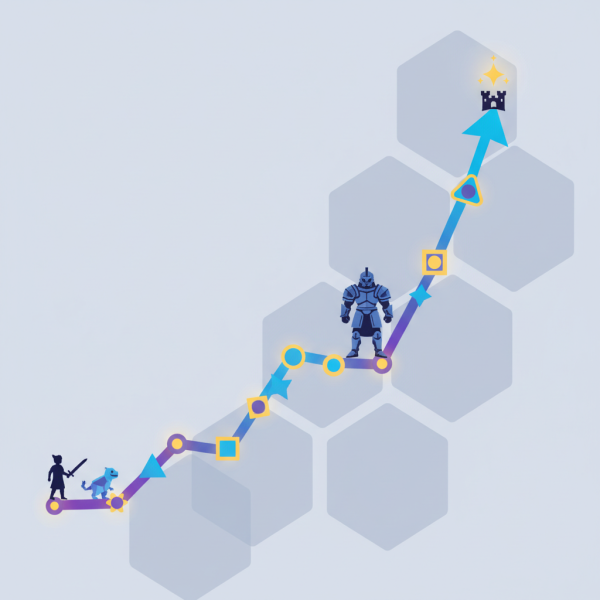
A video game's level curve is the silent conductor of its difficulty, orchestrating the player's journey from novice to master...

