
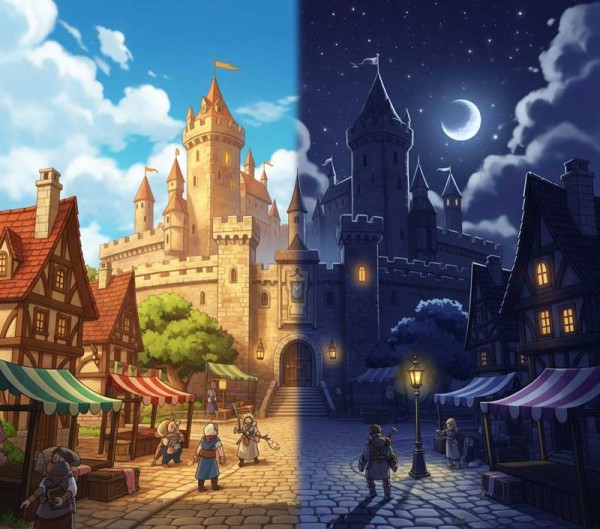
Day and Night Cycles: A Powerful Design Tool in Game Development
What you'll learn
 Foundational Impact of Day and Night CyclesGameplay Mechanics TransformationAtmosphere, Immersion, and Narrative StorytellingTechnical Considerations and Design Philosophy
Introduction to Temporal Dynamics
Day and night cycles are more than just cosmetic features in video games; they are powerful, foundational elements that can deeply influence gameplay, atmosphere, and narrative. For game designers and developers, understanding how to effectively integrate these temporal shifts is crucial for creating dynamic, immersive, and engaging experiences. This article delves into the multifaceted impact of day and night cycles, exploring their potential as a sophisticated design tool across various game genres and development considerations.
The Foundational Impact of Time
At its core, the progression from day to night grounds the player in a simulated world that feels alive and responsive. It imbues the environment with a sense of natural rhythm, mirroring real-world experiences and fostering a deeper connection. The shift isn't merely about lighting; it's a fundamental transformation of the game's canvas.
Visually, the most immediate impact is on illumination. Bright, vibrant daylight gives way to the subdued, often mysterious hues of twilight and the stark contrasts of nighttime. This visual evolution inherently dictates player perception, guiding their attention and influencing their emotional state, from comfort and clarity during the day to tension and trepidation at night.
Gameplay Mechanics Transformation
The true power of day and night cycles lies in their ability to dynamically alter gameplay mechanics, creating varied challenges and opportunities.
-
Visibility and Exploration:
During the day, high visibility often encourages broad exploration, long-distance navigation, and engaging with the environment without immediate threats. Players can clearly see objectives, landmarks, and potential dangers. Night, conversely, dramatically reduces visibility, introducing a sense of vulnerability and mystery. Players may rely on artificial light sources, increasing tension and making navigation more challenging. This shift often promotes stealth-based approaches or encourages players to seek shelter until dawn, completely altering the pacing of exploration.
-
Enemy Behavior and Spawns:
Perhaps one of the most common implementations, day and night cycles can dictate the presence and behavior of adversaries. Nocturnal creatures, undead, or more aggressive enemy variants might only appear after dark, introducing new threats and requiring players to adapt their combat strategies or avoid certain areas. Conversely, some enemies might be weaker or absent during the day. Patrol routes can change, or enemy concentrations might increase in specific locations at night, forcing players to be more cautious.
-
NPC Schedules and Interactions:
A living world feels populated by characters who adhere to routines. Day and night cycles allow NPCs to have schedules: shopkeepers open and close, villagers go to bed, unique quest-givers may only appear at specific hours, or certain dialogue options become available. This adds layers of realism and can tie quests directly to temporal progression, encouraging players to plan their activities and return at appropriate times, enhancing the feeling of a dynamic, breathing environment.
-
Resource Gathering and Crafting:
The availability of resources can be directly tied to the time of day. Specific plants might only bloom at night, rare minerals might be more visible under moonlight, or certain animals might only be huntable during twilight hours. This creates strategic depth, as players must manage their time effectively to gather necessary materials, potentially pushing them into dangerous nocturnal expeditions for valuable rewards.
-
Environmental Puzzles and Opportunities:
Time-based mechanics can be integrated into environmental puzzles. Shadows cast by the sun or moon might be critical for revealing hidden pathways or activating mechanisms. Certain events, like the opening of a gate or the manifestation of a spectral entity, could be strictly tied to sunrise, sunset, or the deepest hours of the night, adding a layer of mystery and requiring observation and patience from the player.
Atmosphere, Immersion, and Narrative
Beyond concrete mechanics, day and night cycles are instrumental in crafting the mood, enhancing immersion, and enriching narrative depth.
Visual Aesthetics and Audio Design
The visual transformation from the bright warmth of day to the cool, stark shadows of night profoundly impacts the game's aesthetic. Different lighting models, post-processing effects, and even texture variations can be employed to evoke distinct emotions—comfort, wonder, fear, or urgency. Similarly, audio design shifts dramatically: the cheerful sounds of daytime wildlife and bustling towns give way to the eerie silence, distant animal calls, or unsettling ambient tracks of the night. This dynamic soundscape reinforces the visual mood and heightens player immersion.
Storytelling Potential
Narratively, day and night cycles offer potent tools. Critical story moments can be made more impactful by occurring at specific times, amplifying their emotional resonance. A tense confrontation under the full moon, a clandestine meeting at dawn, or a desperate search in the dead of night all carry different weight. Temporal progression can also be used to reflect thematic elements, such as the struggle between light and darkness, or to create a sense of urgency, where a looming deadline is represented by the relentless march of time.
Technical Considerations and Performance
Implementing realistic and impactful day and night cycles presents several technical challenges. Dynamic lighting and shadow casting for every object in the scene are computationally intensive. Developers must carefully balance visual fidelity with performance, often employing sophisticated rendering techniques, level-of-detail systems, and optimized light sources. Managing asset variations, such as different skyboxes, particle effects, and material properties across the cycle, also requires robust engineering to ensure seamless transitions and avoid visual glitches, especially across diverse hardware platforms.
Design Philosophy and Player Agency
A key design decision revolves around player agency: should the cycle be fixed, or can players influence it? Many games allow players to sleep or rest, accelerating time to their desired period, offering convenience and strategic control. Other games maintain a strict, unskippable cycle to emphasize realism, create tension, or enforce specific narrative pacing. The choice impacts player freedom, the difficulty curve, and how much planning is required. A fixed cycle can enhance challenge and immersion, while player-controlled time offers more flexibility and reduces frustration, requiring careful consideration of the game's core loop and intended player experience.
Conclusion
Day and night cycles are far more than aesthetic flourishes; they are integral to creating deep, responsive, and emotionally resonant game worlds. By meticulously designing their impact on gameplay mechanics, environmental aesthetics, audio, and narrative, developers can transform a simple time progression into a versatile and powerful design tool. From influencing player exploration and enemy encounters to shaping NPC routines and storytelling beats, the thoughtful integration of day and night cycles can significantly elevate a game's immersion, strategy, and overall appeal, making the world truly feel alive.
Comprehension questions
 How do day and night cycles specifically impact visibility and exploration mechanics in video games?Beyond visibility, what are two distinct ways day/night cycles can alter enemy behavior or spawns?Explain how dynamic time progression contributes to the feeling of a What are some key technical challenges developers face when implementing realistic day and night cycles in games?
Community Poll
Related Content
The Dynamic Impact of Weather Systems on Gameplay
This article explores how advanced weather systems in video games move beyond mere aesthetics to profoundly influence gameplay mechanics, player strategy, and world immersion...

