
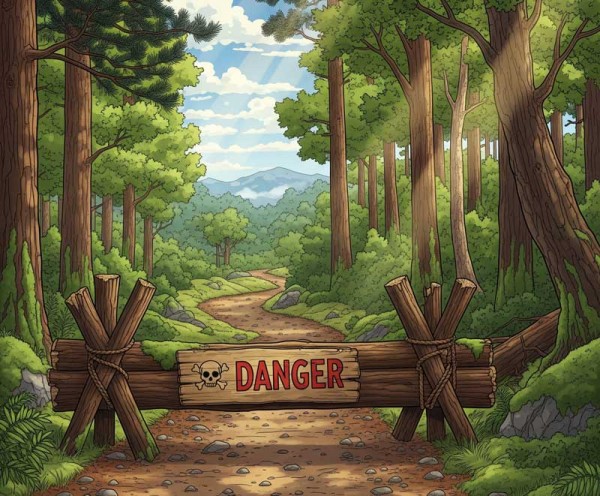
Designing Environmental Hazards for Engaging Open Worlds
What you'll learn
 What Are Environmental Hazards?Categories of Environmental HazardsIntegrating Hazards into World DesignBest Practices for Hazard Implementation
Open-world games thrive on exploration, discovery, and emergent gameplay. A crucial, yet often underestimated, element contributing to these experiences is the intelligent design and implementation of environmental hazards. These aren't just background details; they are interactive elements that significantly shape player agency, challenge, and the overall feel of the game world. For video game designers and developers, understanding how to leverage these hazards is key to creating compelling and memorable open-world environments.
What Are Environmental Hazards?
Environmental hazards in an open-world game are interactive elements of the game world that can impede a player's progress, inflict damage, or otherwise negatively impact their character. Unlike enemy encounters, which are typically mobile and actively hostile, hazards are generally static or predictable elements of the environment itself. They can be naturally occurring phenomena, man-made traps, or dangerous terrain features. Their primary purpose is to add layers of challenge, provide navigational puzzles, and reinforce the distinct character of different regions within the game's expansive map.
Consider a dense jungle, a desolate desert, or a crumbling ruin. Each of these settings can offer unique dangers that are intrinsic to their nature. These hazards force players to adapt their strategies, observe their surroundings more carefully, and make meaningful choices about risk versus reward. Without them, open worlds can feel flat and unchallenging, reducing the sense of accomplishment that comes from overcoming obstacles.
Categories of Environmental Hazards
Environmental hazards can be broadly categorized based on their primary function and interaction with the player character. Understanding these categories helps in designing a diverse and engaging world.
Physical Barriers and Obstacles
These hazards primarily restrict movement or block access to certain areas, often requiring specific player abilities, items, or alternative routes to overcome. They act as natural gates or puzzles within the environment.
- Impassable Terrain: Steep cliffs, deep ravines, thick briar patches, or raging rivers that characters cannot traverse without a specific movement ability (e.g., climbing, swimming, gliding) or vehicle.
- Structural Obstacles: Rubble piles, collapsed bridges, locked doors, or overgrown vegetation that requires a specific tool (e.g., explosives, a key, a machete) or a creative solution to bypass.
- Environmental Dead Ends: Mazes of caves, dense fog banks, or areas with extreme weather conditions that reduce visibility and make navigation exceedingly difficult, potentially leading players astray.
The design of physical barriers should encourage exploration and problem-solving, rather than simply frustrating the player. They can also serve to funnel players towards narrative objectives or specific points of interest.
Damaging Elements
These hazards directly inflict harm on the player character, often through contact or proximity, reducing health, stamina, or other vital stats. They demand player awareness and skillful evasion or mitigation.
- Lava Pits or Acid Pools: Direct contact causes rapid damage, often lethal if sustained. These are common in volcanic or corrupted environments.
- Spikes and Traps: Hidden pressure plates, tripwires, or visible spike pits that activate upon player interaction or proximity. Damage can vary from minor to instant death.
- Extreme Temperatures: Areas of intense heat or cold that drain health or stamina over time, requiring specific gear, buffs, or shelter to survive.
- Toxic Gas or Radiation: Invisible or visible clouds that cause damage-over-time, often requiring gas masks or radiation suits for safe passage.
- Falling Debris: Unstable ceilings, rolling boulders, or collapsing structures that can crush or harm characters if they don't react quickly.
The impact of damaging elements should be clearly communicated through visual and audio cues, allowing players a fair chance to react and avoid harm. Instant, unavoidable death is generally discouraged unless it serves a specific narrative or puzzle purpose.
Conditional and Dynamic Hazards
These hazards are not always active or static. Their dangerous nature might depend on a specific condition, player action, or environmental trigger, adding an element of unpredictability and requiring careful observation.
- Weather Systems: Blizzards reducing visibility and causing damage, sandstorms disorienting players, or lightning strikes during thunderstorms.
- Wildlife Aggression Zones: Areas where certain fauna become hostile if players enter their territory or perform specific actions, blurring the line between hazard and enemy.
- Geological Instability: Earthquakes creating new fissures, landslides blocking paths, or active geysers erupting periodically.
- Environmental Triggers: Floors that collapse after a weight threshold, ancient mechanisms that activate deadly traps when tampered with, or hazardous areas that are only dangerous during specific times of day or night.
Dynamic hazards are excellent for making the world feel alive and reactive to the player's presence. They encourage continuous vigilance and adaptation, fostering a deeper immersion into the environment.
Integrating Hazards into World Design
Effective integration of environmental hazards goes beyond simply placing them in the world. They should serve multiple design goals:
- Challenge and Skill Testing: Hazards provide non-combat challenges, testing player observation, timing, and movement skills.
- Encouraging Exploration: Difficult-to-reach areas protected by hazards can hide valuable loot or lore, motivating players to find solutions.
- Pacing and Flow: Hazards can naturally slow down or speed up gameplay, providing moments of tension followed by periods of calm, breaking up the monotony of travel.
- World Building and Lore: The type and placement of hazards can tell stories about the world's history, its dangers, or the civilizations that once inhabited it. A region filled with radiation implies a past catastrophe.
- Strategic Gameplay: Players can sometimes use hazards against enemies, luring foes into lava or pushing them off cliffs, adding a layer of strategic depth to combat encounters.
Designers should consider how hazards interact with other game systems, such as crafting (requiring specific materials to bypass hazards), character progression (unlocking abilities to overcome obstacles), and mission design (integrating hazards into objectives).
Best Practices for Implementation
To ensure environmental hazards enhance the gameplay experience rather than detract from it, several best practices should be followed:
- Clear Visual and Audio Cues: Players should be able to identify a hazard before encountering it. Bright colors, smoke, distinct sounds, or environmental particles can warn players of impending danger.
- Fair Telegraphing: For dynamic or activation-based hazards, there should be a clear "wind-up" or visual/audio cue indicating when the hazard is about to become active, giving players a chance to react.
- Logical Placement: Hazards should make sense within the context of the environment. Lava in a volcanic region is logical; lava in a pristine forest without explanation is not.
- Player Agency and Counterplay: Provide players with tools, abilities, or alternative routes to overcome or mitigate hazards. This fosters a sense of accomplishment rather than frustration.
- Scalability and Progression: Hazards can increase in complexity or severity as players progress through the game or enter more dangerous regions, reflecting character growth and world difficulty.
- Performance Considerations: Complex particle effects, dynamic physics, or extensive environmental destruction associated with hazards can impact game performance. Optimization is key.
Balancing challenge with fairness is paramount. Hazards should feel like an integral part of the world, not cheap tricks designed to punish players arbitrarily.
Summary
Environmental hazards are an indispensable component of compelling open-world game design. They serve not only as obstacles to overcome but as crucial elements for world-building, narrative pacing, and strategic depth. By categorizing hazards into physical barriers, damaging elements, and conditional/dynamic threats, designers can create a rich tapestry of challenges. Implementing these hazards effectively requires clear communication through visual and audio cues, fair telegraphing, logical placement, and providing players with meaningful ways to interact with and overcome them. A well-designed hazard system enhances exploration, tests player skills, and ultimately contributes to a more immersive and rewarding open-world experience for players.
Comprehension questions
 What are the three main categories of environmental hazards discussed in the article?How can physical barriers be designed to encourage exploration and problem-solving rather than just frustration?What are some best practices for ensuring environmental hazards enhance gameplay rather than detract from it?How can environmental hazards contribute to world-building and narrative in an open-world game?