
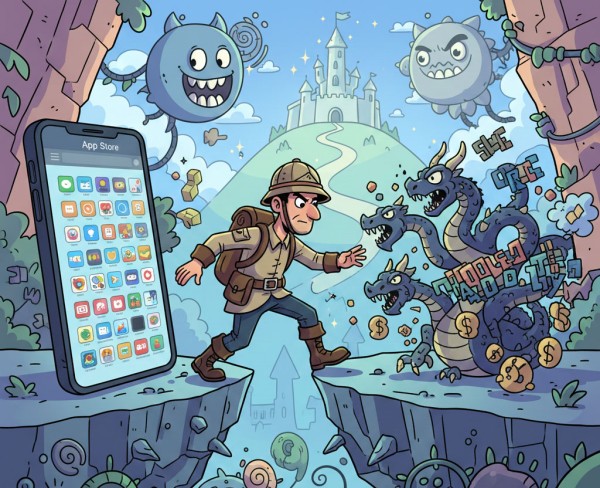
Marketing Challenges on App Stores for New Mobile Games
What you'll learn
 App Store DiscoveryUser Acquisition CostsPlatform Policy AdherencePost-Launch Engagement
Launching a new mobile video game into the digital marketplaces of Apple's App Store and Google Play is an endeavor fraught with both immense potential and significant hurdles. For game designers and developers, the creative process might be complete, but the journey to reaching an audience has only just begun. What often becomes apparent quickly is that building a great game is only half the battle; successfully marketing it to stand out amidst millions of competitors presents its own unique set of formidable challenges. Understanding these common pitfalls is crucial for crafting a robust launch strategy and ensuring your passion project finds its intended players.
The Discovery Dilemma
One of the most profound challenges in mobile game marketing is simply getting your game discovered. With millions of apps vying for attention, a new title can easily get lost in the digital ocean. Apple and Google's store algorithms prioritize various factors, and breaking through the noise requires more than just luck.
App Store Optimization (ASO) is vital, yet often underestimated. This involves strategic use of keywords in your title and description, compelling screenshots, an engaging icon, and well-produced preview videos. However, keyword saturation is immense, especially in popular genres, making it difficult to rank high for relevant terms without significant existing traction or brand recognition.
Visibility issues extend beyond search. Featured placements are highly coveted but exceedingly rare for new, unproven titles. Relying solely on organic discovery through the app stores is increasingly insufficient for a new game to gain meaningful momentum.
Skyrocketing User Acquisition Costs (UAC)
Even if players find your game, convincing them to download it and then retain them is another beast entirely. The cost of acquiring new users through paid advertising channels has escalated dramatically over recent years. Platforms like Facebook, Google Ads, and various ad networks offer powerful targeting, but competition for ad space is fierce.
Cost Per Install (CPI) can vary wildly based on region, genre, and targeting, but it's often a significant expense that can quickly deplete a marketing budget. For many indie developers or smaller studios, competing with the marketing budgets of AAA publishers becomes an unsustainable arms race. This makes a strong focus on viral loops, community building, and highly effective ASO even more critical to drive down the effective UAC.
Navigating Platform Policies and Guidelines
Both Apple and Google maintain strict, constantly evolving policies and guidelines for app submissions. Adherence to these rules is non-negotiable, and missteps can lead to delays, rejections, or even removal from the stores. Understanding these requirements from development through launch is essential.
Common issues include:
- Submission Process: Lengthy review times, especially for initial submissions or significant updates, can disrupt launch schedules.
- Monetization Models: Restrictions on in-app purchases, loot boxes, and advertising practices are frequently updated. Developers must ensure their chosen monetization strategy complies with store terms, including revenue sharing models.
- Data Privacy: Evolving privacy regulations (e.g., GDPR, CCPA) and platform changes (like Apple's App Tracking Transparency) demand careful handling of user data and explicit consent, impacting ad targeting capabilities.
- Content Guidelines: Games must avoid objectionable content, ensure appropriate age ratings, and not infringe on intellectual property rights.
Failing to meet these guidelines can lead to frustrating back-and-forths with review teams, delaying your game's market entry or subsequent updates.
The Retention Riddle: Beyond the First Download
Acquiring a user is one thing; keeping them engaged is another, and perhaps even more difficult. Mobile games notoriously suffer from high early churn rates. Many players download a game, play it for a short period, and then uninstall it, never to return. This makes measuring success by downloads alone a misleading metric.
Developers must prioritize long-term engagement strategies. This includes a compelling gameplay loop, regular content updates, in-game events, and fostering a vibrant player community. Metrics like Lifetime Value (LTV), Daily Active Users (DAU), and Monthly Active Users (MAU) become far more indicative of a game's true success than raw download numbers.
Coping with Competition and Market Saturation
The sheer volume of games released daily on both platforms is staggering. This intense market saturation means that even a highly innovative and polished game faces an uphill battle to stand out. Players have an almost limitless choice, and their attention spans are shorter than ever.
Differentiating your game becomes paramount. This could be through a unique art style, an innovative gameplay mechanic, a compelling narrative, or targeting an underserved niche market. Generic games, no matter how well-made, struggle to carve out a sustainable audience in such a crowded landscape.
The Post-Launch Grind: Updates, Bugs, and Feedback
A game's launch is not an endpoint but rather the beginning of its live-service lifecycle. Post-launch challenges include continuously monitoring performance, addressing bugs, and incorporating player feedback. Negative reviews due to technical issues or unmet expectations can quickly tarnish a game's reputation and deter new downloads.
Rapid iteration, prompt bug fixes, and transparent communication with your player base are crucial. Developers must be prepared for the ongoing commitment required to maintain, improve, and evolve their game long after its initial release. This sustained effort is key to both retaining existing players and attracting new ones.
Summary
Successfully marketing a new mobile video game on the Apple and Google app stores is a complex, multifaceted challenge that extends far beyond the development phase. Developers must contend with the daunting task of achieving discovery in a saturated market, managing escalating user acquisition costs, meticulously adhering to stringent and evolving platform policies, and tackling the ongoing puzzle of player retention. Furthermore, intense competition and the continuous post-launch demands for updates and support add layers of complexity. Overcoming these hurdles requires a strategic, adaptive, and long-term approach, blending robust game design with astute marketing and community management.
Comprehension questions
 What is App Store Optimization (ASO) and why is it crucial for mobile game discovery?Why are User Acquisition Costs (UAC) a significant challenge for new mobile games, especially for smaller studios?Name two common types of issues developers might encounter when navigating Apple and Google's platform policies and guidelines.Beyond initial downloads, what key metrics are more indicative of a mobile game's long-term success, and why is player retention so important?