
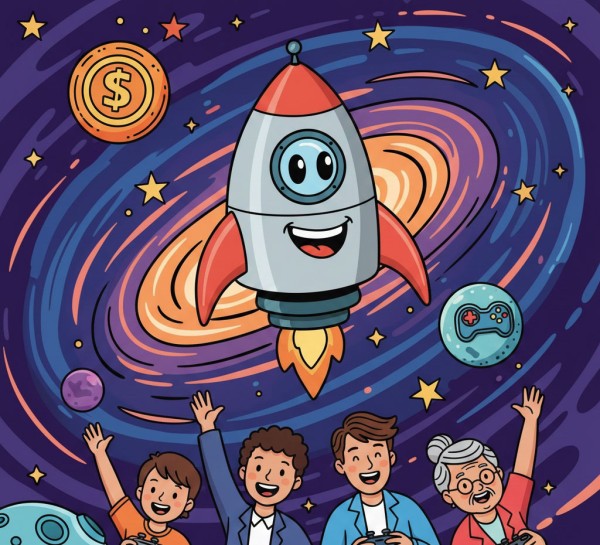
The Broad Market Appeal of Space-Themed Games
What you'll learn
 Understanding Space Game AppealChallenges to Mainstream AdoptionKey Drivers for Commercial SuccessStrategies for Broad Market Engagement
Space-themed video games have long captivated a dedicated segment of the gaming community, offering unparalleled opportunities for exploration, combat, and grand narratives across the cosmos. From epic space operas to intricate simulation titles, the genre promises a unique blend of wonder and challenge. However, for every breakout success that captures mainstream attention, numerous titles remain niche, appealing primarily to hardcore enthusiasts. This article delves into the inherent appeal and the significant hurdles that space-themed games encounter when attempting to conquer the broader general market, offering insights for fellow video game designers and developers.
The Enduring Allure of the Cosmos
The fundamental appeal of space games lies in their ability to tap into humanity’s innate curiosity and desire for exploration. The vastness of space presents an ultimate canvas for adventure, offering a sense of scale and freedom rarely found in other genres. Players can embody intrepid explorers, cunning traders, feared pirates, or heroic defenders, forging their own path through an endless frontier.
Science fiction, as a genre, provides a rich tapestry of tropes and narratives that resonate deeply with many. From advanced technology and alien civilizations to political intrigue and existential threats, space games often leverage these elements to create immersive and thought-provoking experiences. The escapism offered by venturing into uncharted star systems, customizing starships, and engaging in interstellar dogfights is a powerful draw for those seeking grander adventures than terrestrial settings can provide.
Core attractions for players often include:
- Unfettered Exploration: Discovering new planets, star systems, and celestial phenomena.
- Strategic Combat: Engaging in thrilling ship-to-ship battles, often requiring tactical positioning and resource management.
- Economic Simulation: Participating in trade routes, resource mining, and building up personal or corporate wealth.
- Customization and Progression: Upgrading ships, developing character skills, and personalizing one’s fleet.
- Narrative Depth: Experiencing rich storylines, moral choices, and interacting with diverse factions and characters.
Challenges to Broad Market Appeal
Despite their undeniable strengths, space-themed games frequently face obstacles that prevent them from achieving widespread mainstream popularity. One of the most significant challenges is the inherent complexity often associated with the genre. Many space simulations feature intricate control schemes, deep economic models, and steep learning curves that can deter casual players seeking immediate gratification.
The perceived niche appeal of science fiction itself can also be a barrier. While a strong subculture exists, not all players are drawn to the aesthetics, lore, or often hard science fiction concepts prevalent in many space titles. This can limit the potential audience compared to more universally accessible fantasy or contemporary settings.
Another hurdle is the balance between scale and intimacy. While the vastness of space is an attraction, it can also lead to feelings of isolation or a lack of immediate impact. Players might spend significant time traveling or performing repetitive tasks, which can dilute the sense of urgency or personal connection that smaller, more focused game worlds often provide. This can be exacerbated by overly granular resource management or intricate crafting systems that feel like chores rather than engaging gameplay.
Furthermore, the technical demands of rendering expansive star systems, detailed ships, and complex physics can be substantial. This often translates to higher development costs and can require more powerful hardware, potentially alienating players with older systems or those who prefer gaming on less powerful platforms. Optimizing for diverse hardware while maintaining visual fidelity and seamless gameplay is a constant tightrope walk for developers in this genre.
Factors Driving Success and Mainstream Breakthroughs
For space-themed games to transcend their niche, developers often focus on several key areas that enhance accessibility and player engagement without sacrificing depth. A compelling narrative with strong characters is paramount. Games like the Mass Effect series demonstrate how rich storytelling and memorable companions can ground grand galactic adventures in personal, relatable stakes, drawing in players who might not typically gravitate towards sci-fi.
Accessibility in terms of user interface and onboarding is also crucial. Streamlined controls, intuitive menus, and effective tutorials can significantly lower the barrier to entry, allowing new players to grasp complex mechanics without feeling overwhelmed. This doesn't mean dumbing down the game, but rather presenting its systems in an understandable and manageable way.
Innovation in core gameplay mechanics can also differentiate a title and attract a wider audience. Whether it's unique procedural generation, inventive combat systems, or novel social interactions, fresh approaches can inject new life into familiar genre tropes. Furthermore, robust multiplayer options, including cooperative play, competitive modes, or persistent online universes, can foster strong communities and extend a game's longevity, appealing to players seeking social experiences.
Successful space games often blend elements from other popular genres, broadening their appeal:
- RPG Elements: Character progression, dialogue choices, skill trees (e.g., Starfield, Mass Effect).
- Action & Adventure: Thrilling combat, platforming, exploration of unique environments (e.g., Star Wars Jedi: Fallen Order/Survivor, No Man's Sky).
- Strategy & Management: Base building, fleet command, resource allocation (e.g., Stellaris, Homeworld).
- Survival & Crafting: Resource gathering, base construction, environmental challenges (e.g., Subnautica, No Man's Sky).
Stunning visuals and immersive sound design are always important, but particularly so in space games where spectacle is part of the allure. High-fidelity graphics, detailed ship models, breathtaking nebulae, and impactful sound effects contribute significantly to the sense of wonder and presence, pulling players deeper into the cosmic experience.
Targeting the General Market: A Strategic Approach
For designers aiming for broader market penetration, the challenge lies in carefully balancing the genre's inherent depth with user-friendliness. This involves thoughtful design choices from the earliest stages of development. Prioritizing a clear progression path, whether story-driven or emergent, helps players feel a sense of accomplishment and direction. Integrating moments of focused, impactful gameplay amidst larger sandbox elements can prevent player fatigue.
Effective marketing also plays a vital role. Highlighting unique selling points, showcasing accessible gameplay loops, and emphasizing engaging narrative elements can attract players who might otherwise dismiss a space game as too complex or niche. Branding a space game less as a "simulation" and more as an "adventure" or "RPG" can also subtly shift perception and broaden its appeal.
Summary
Space-themed video games hold immense potential for captivating experiences, drawing players with the promise of exploration, grand narratives, and cosmic adventure. While their complexity, niche appeal, and technical demands can limit mainstream adoption, developers can significantly broaden their market by focusing on accessible design, compelling storytelling, innovative mechanics, and smart genre blending. By thoughtfully addressing these elements, designers can craft cosmic journeys that resonate not only with dedicated sci-fi fans but with a much wider audience of gamers seeking their next great adventure.
Comprehension questions
 What are some core attractions that draw players to space-themed games?What are three significant challenges that space-themed games often face in attracting a general market audience?According to the article, beyond stunning visuals, what are two critical design elements that can significantly contribute to the broad success of a space game?How can game developers balance the inherent complexity of space simulation with the need for accessibility to appeal to a wider audience?