Design Challenges of Successful Idle Mobile Games
- -->> 4. Design Challenges of Successful Idle Mobile Games
What you'll learn
 Balancing Engagement and IdlenessEthical Monetization StrategiesContent Longevity and Player RetentionUI/UX for Complex Idle Systems
Idle style mobile games have carved out a significant niche in the gaming market, offering players the satisfaction of continuous progress with minimal active input. Their seemingly simple premise, however, lies a complex web of design challenges that can make or break a title. For game designers and developers, understanding these hurdles is paramount to crafting an experience that truly succeeds in captivating and retaining players.
The Illusion of Progress and Sustained Engagement
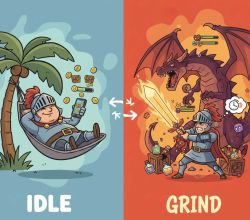
One of the most fundamental challenges lies in maintaining player engagement when the core gameplay loop is designed around minimal interaction. Players need to feel a constant sense of forward momentum, even when they're not actively tapping or managing resources. This requires careful balancing of active gameplay moments with the passive, idle progression.
If the active components are too demanding, the game loses its idle charm. If they are too sparse or unrewarding, players quickly become disengaged. The "Aha!" moment, where a player understands a new system or unlocks a powerful upgrade, needs to be consistently delivered to prevent boredom and reinforce the value of their time, active or passive.
Making offline progress feel meaningful is also critical. Simply calculating resources earned isn't enough; players need tangible new unlocks, visible changes, or significant boosts upon returning to the game to justify their absence and fuel their desire to check back in.
Monetization Without Predation
Idle games are almost exclusively free-to-play, meaning their revenue relies heavily on in-app purchases (IAPs) and advertising. Designing a monetization strategy that is effective without feeling predatory or gate-keeping is a delicate art. The goal is to enhance the player's experience, not to create frustrating bottlenecks that can only be overcome with money.
Consider these points for ethical monetization:
- Value-Driven IAPs: Offer purchases that provide genuine convenience, unique cosmetic options, or meaningful boosts that accelerate progress without making it impossible for non-spenders.
- Player-Initiated Ads: Implement rewarded video ads that players choose to watch for specific benefits, rather than disruptive interstitial ads that interrupt gameplay.
- Fair Progression: Ensure that the core game loop and progression are enjoyable and rewarding even for players who never spend a dime. Monetization should feel like an optional accelerator or personalizer, not a mandatory toll gate.
Finding this balance ensures that paying players feel they're getting value, and non-paying players don't feel penalized, fostering a healthier, more sustainable player base.
The Content Treadmill and Longevity
Idle games, by their nature, are about ever-increasing numbers and unlocking new tiers of power. This creates a relentless "content treadmill" where developers must constantly introduce new features, upgrades, prestige layers, and game modes to keep the late-game interesting. Without a steady stream of new content, even the most dedicated players will eventually hit a wall and churn.
Designing effective prestige or "soft reset" mechanics is crucial here. These systems allow players to restart their progress (often with significant bonuses) to experience the early game again with a new perspective and work towards even greater heights. This extends replayability and provides a sense of exponential growth, but requires careful balancing to ensure the reset feels rewarding, not punishing.
Managing development costs against this constant demand for content is a major challenge. Clever procedural generation, modular content design, and robust frameworks can help, but the hunger for novelty in idle games is insatiable.
Technical and Performance Hurdles
While often perceived as simple, the underlying mechanics of idle games can be surprisingly complex. Calculating offline progress for potentially thousands of intertwined systems, managing large numbers, and ensuring data integrity across sessions requires robust backend engineering. Optimizing these calculations to prevent battery drain and maintain smooth performance on a wide range of mobile devices is a critical technical challenge.
Considerations include:
- Efficient data serialization and deserialization for saving and loading game states.
- Minimizing CPU usage for background calculations.
- Memory optimization, especially with numerous visual upgrades and effects.
- Implementing robust anti-cheat measures for competitive elements or to prevent manipulation of offline progress.
A poorly optimized idle game will quickly lead to player frustration and uninstalls, regardless of how engaging its core loop might be.
Clarity in UI/UX for Complex Systems
Idle games often feature multiple layers of interconnected systems: production chains, upgrade trees, research facilities, prestige systems, and more. Presenting this complexity to the player in a clear, intuitive, and non-overwhelming manner through the User Interface (UI) and User Experience (UX) is a significant design hurdle.
New players need effective onboarding that gradually introduces systems without dumping too much information at once. Veteran players need efficient ways to manage their sprawling empires without excessive tapping or navigation. Clear visual feedback on progress, actionable upgrade notifications, and easily digestible information are paramount. A cluttered or confusing UI can quickly alienate players and obscure the satisfying progression that is the hallmark of the genre.
Summary
Designing a successful idle style mobile game is far from a passive endeavor. It demands a sophisticated understanding of player psychology, meticulous economic balancing, continuous content planning, robust technical execution, and elegant UI/UX design. From creating the illusion of constant progress and implementing ethical monetization, to managing the relentless content treadmill and ensuring smooth performance, developers face a myriad of challenges. Overcoming these hurdles requires a holistic and iterative approach, focusing on sustained player delight to build a truly enduring and profitable idle experience.
Comprehension questions
 What is the primary challenge in balancing active and passive gameplay in idle mobile games?How can developers implement monetization strategies that avoid feeling predatory in idle games?What role does clear UI/UX play in overcoming the complexity inherent in many idle game systems?
Review Quiz
Next Lesson

Course Contents : Designing for the Mobile Idle Genre
- >> 4.
 Design Challenges of Successful Idle Mobile Games