Idle vs. Grind: Understanding Mobile Game Engagement Philosophies
- -->> 3. Idle vs. Grind: Understanding Mobile Game Engagement Philosophies
What you'll learn
 Game Mechanics ComparisonPlayer Psychology in Mobile GamesMonetization StrategiesDesign Challenges & Solutions
Understanding the fundamental differences between idle style and grind style mobile games is crucial for any game designer or developer looking to create engaging and successful experiences in the saturated mobile market. While both genres often involve repetitive actions and progression systems, their core player engagement loops, monetization strategies, and player psychology differ significantly. This article will dissect these two distinct approaches, providing insights into their mechanics, target audiences, and design implications to help you make informed development decisions.
Defining Idle Style Mobile Games
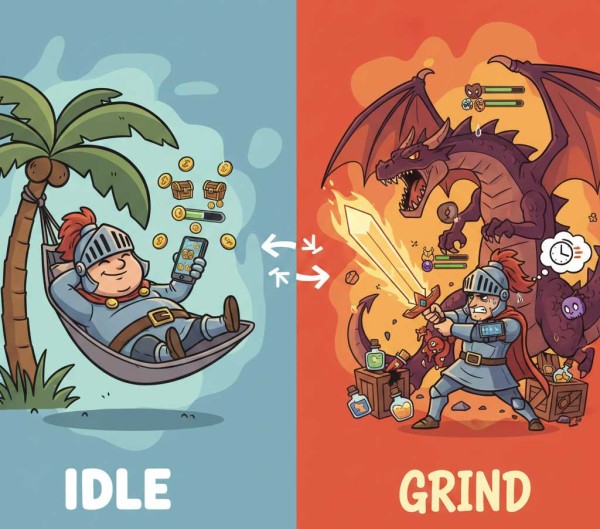
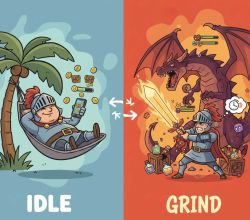
Idle games, often referred to as clicker or incremental games, are characterized by their emphasis on passive progression. Players typically initiate actions, and the game continues to generate resources, currency, or experience points even when the player is offline or not actively interacting with the game. The primary engagement comes from making strategic decisions about upgrades and investments rather than continuous input.
Core mechanics often revolve around automation. Players might start by repeatedly tapping to earn resources, but quickly unlock systems that automate this process. This automation allows for exponential growth, where small investments lead to increasingly larger returns over time. The illusion of constant growth and progress is a key psychological driver for player retention.
- Passive Progression: Game systems continue to advance even when the player is not actively engaged.
- Automation: Initial manual tasks are replaced by automated processes.
- Prestige Mechanics: A common feature where players reset their progress to gain permanent bonuses, accelerating future playthroughs.
- Exponential Growth: Progression often scales rapidly, providing a constant sense of advancement.
Defining Grind Style Mobile Games
Grind style mobile games, conversely, demand consistent and active engagement from the player. Progression in these games is often tied directly to the amount of time and effort a player invests in repetitive tasks, such as battling enemies, gathering resources, or completing quests. The satisfaction derived from these games comes from overcoming challenges, mastering mechanics, and seeing tangible results from dedicated effort.
The core loop typically involves performing an action, receiving a reward, and then using that reward to become stronger or unlock new content, enabling the player to tackle more difficult versions of the same action. This creates a clear, often linear, progression path that rewards perseverance. Player agency through direct action and skill application is paramount.
- Active Engagement: Players must continuously interact with the game to progress.
- Repetitive Tasks: Progression is earned through repeated completion of specific actions.
- Skill and Strategy: Success often requires player input, decision-making, or timing.
- Deterministic Rewards: Rewards are typically tied to completing specific tasks or defeating enemies, providing a clear goal for effort.
Fundamental Differences: Engagement and Progression
The most significant distinction lies in their approach to player engagement and progression. Idle games minimize required player input, offering a low-friction experience where progress unfolds largely autonomously. The player's role is more akin to a manager or strategist, making high-level decisions about resource allocation and system optimization. Progress in idle games often feels boundless and rapid, though less directly earned.
Grind games, however, place a high value on player time and effort. Progression is a direct consequence of active play and repeated action. The sense of achievement is tied to personal investment and overcoming challenges, making the rewards feel more earned. This often translates to a more traditional gaming experience, albeit scaled for mobile play sessions.
Monetization Strategies
Monetization in idle games often centers around accelerating passive gains. Common strategies include in-app purchases for premium currencies that buy time skips, permanent multipliers, or unique automation upgrades. Ad monetization is also prevalent, offering temporary boosts, double rewards, or skips for watching video ads, aligning with the game's low-commitment nature.
Grind games typically monetize through convenience, power, and customization. This can manifest as energy systems that limit play sessions (encouraging purchases to extend play), loot boxes for rare items or characters, battle passes for structured rewards, or direct purchases of powerful gear or resources that reduce the grind. Cosmetic items are also a significant revenue stream, allowing players to personalize their hard-earned characters.
Design Considerations for Each Style
For idle games, designers must focus on balancing the progression curve to ensure players always feel a sense of growth without trivializing upgrades too quickly. The meta-game, involving prestige systems and long-term goals, is crucial for sustained engagement. The challenge is keeping players interested with minimal active gameplay, often achieved through new systems unlocks, daily challenges, and a robust upgrade path.
For grind games, the primary design challenge is to keep the repetitive tasks from becoming tedious or burning out players. This requires careful attention to reward pacing, meaningful progression, and introducing variety in tasks or enemies. Social features, competitive elements (PvP), and cooperative play can also be vital in fostering community and extending engagement beyond the core grind loop.
Hybrid Approaches
It's important to note that many successful mobile games adopt hybrid approaches, blending elements from both idle and grind mechanics. A game might feature extensive grinding for character upgrades while also including an 'auto-battle' or 'offline progression' system to ease the burden and cater to players with less time. These hybrids aim to capture the best aspects of both worlds, offering flexibility in how players engage.
Summary
In conclusion, idle and grind style mobile games represent distinct philosophies in player engagement and progression. Idle games prioritize passive, low-friction growth driven by strategic upgrades and automation, appealing to players seeking consistent, effortless progress. Grind games, conversely, demand active input and time investment, rewarding players with a strong sense of accomplishment through effort and skill. Understanding these fundamental differences in core loops, monetization, and player psychology is essential for game designers to craft experiences that resonate with their target audience and achieve commercial success.
Comprehension questions
 What is the primary psychological driver for player retention in idle style mobile games?Beyond energy systems and loot boxes, what is another significant revenue stream for grind style mobile games mentioned in the article?What is considered the most significant distinction between idle and grind games regarding player engagement and progression?What is the primary design challenge for grind style mobile games to prevent player burnout?
Community Poll
Next Lesson
Course Contents : Designing for the Mobile Idle Genre
- >> 3.
 Idle vs. Grind: Understanding Mobile Game Engagement Philosophies