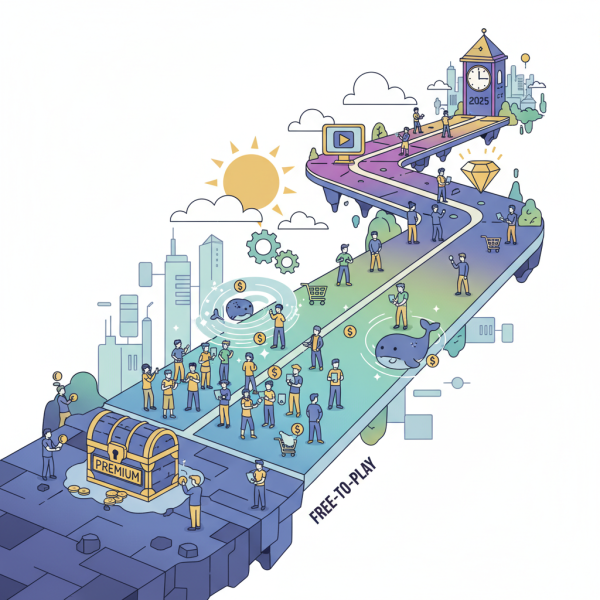
Premium to F2P to Hybrid-Casual
- -->> 1. Premium to F2P to Hybrid-Casual
What you'll learn
 Premium Game ModelsFree-to-Play EcosystemHybrid-Casual GamingFuture Market Trends
The landscape of video game monetization has undergone a seismic transformation over the past two decades. What was once a market dominated by premium, "pay-once" titles has largely given way to the ubiquitous Free-to-Play (F2P) ecosystem. This dramatic evolution continues to reshape player expectations and developer strategies, leading us towards an exciting new frontier: the burgeoning hybrid-casual market, poised to reach significant prominence by 2025. Understanding this pivot is crucial for anyone looking to comprehend the modern gaming industry's intricate economic models and future trajectories.
The Premium Era: A Look Back at "Pay-Once"
For many years, the standard model for video games involved a one-time purchase. Players would buy a game, either physically or digitally, and gain full access to its content. This approach fostered a sense of completeness and delivered a clear value proposition: pay X amount, get Y game. Developers focused on crafting rich, finite experiences that justified the upfront cost.
This model cultivated a dedicated fanbase around specific titles and franchises, emphasizing deep narratives, complex mechanics, and expansive worlds. Monetization was straightforward, relying solely on initial sales and, occasionally, expansion packs or sequels. However, it also presented challenges, such as high barriers to entry for new players and the limited ability for developers to generate ongoing revenue post-launch.
The F2P Revolution: Accessibility and Engagement
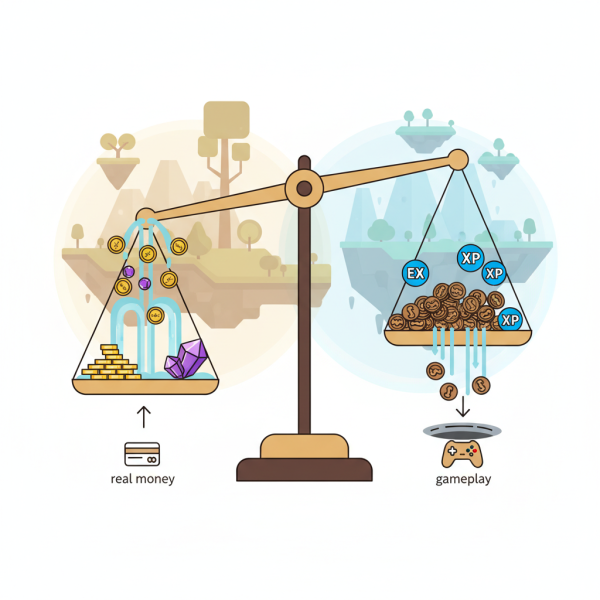
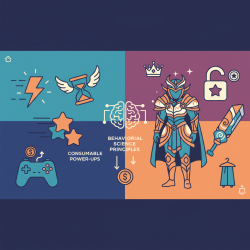
The advent of mobile gaming and robust internet infrastructure catalyzed the rise of the Free-to-Play model. F2P games offer their core experience without an upfront cost, attracting a massive audience. Monetization then occurs through in-app purchases (IAPs) for virtual items, cosmetic enhancements, progression boosters, or through in-game advertising.
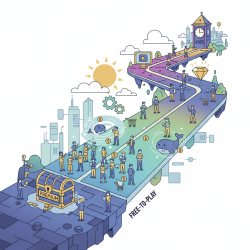
This model dramatically lowered the barrier to entry, allowing millions of players to sample games they might never have paid for. Developers could then monetize a small percentage of highly engaged "whales" who spent significantly, alongside a broader base contributing through smaller purchases or ad views. The focus shifted from one-time transactions to long-term player engagement and continuous content updates, driving sustained revenue streams.
Challenges of Pure F2P: Saturation and Acquisition Costs
While incredibly successful, the pure F2P model has its own set of hurdles. The sheer volume of F2P titles, especially in the mobile space, has led to market saturation. Standing out from the crowd has become increasingly difficult and expensive. User acquisition (UA) costs have skyrocketed, making it challenging for new games to gain traction without substantial marketing budgets.
Player retention is another significant concern. With countless free alternatives available, players are quick to abandon games that don't immediately capture their interest or offer compelling reasons to stay. This has pushed developers to constantly innovate on engagement loops and monetization strategies, often leading to complex systems that can sometimes alienate casual players.
The Emergence of Hybrid-Casual: Bridging the Gap
Facing the challenges of both premium and traditional F2P, the industry has seen the rise of "hybrid-casual" games. This model represents a strategic evolution, blending the accessible, intuitive gameplay loops of hyper-casual titles with the deeper progression, monetization, and retention mechanics typically found in mid-core F2P games. Hybrid-casual games aim to capture a broad audience while fostering long-term engagement and robust revenue generation.
These games often start with very simple, instantly understandable core mechanics, appealing to casual players. However, beneath this accessible exterior lies a more sophisticated meta-game, offering players reasons to return, progress, and spend over time. It's about combining immediate gratification with a sense of meaningful long-term investment.
Key Characteristics of Hybrid-Casual Games
- Simple Core Loop: Easy to learn, often one-tap or swipe mechanics, providing instant fun.
- Deeper Meta-Game: Beyond the core loop, there's usually a progression system, base building, character upgrades, or collection elements.
- Hybrid Monetization: Utilizes both rewarded video ads (common in hyper-casual) and in-app purchases (common in mid-core) for different player segments.
- Broader Appeal: Attracts both truly casual players looking for quick fun and more engaged players seeking progression.
- Iterative Development: Often designed for continuous updates and content additions to keep players engaged.
Monetization in Hybrid-Casual: A Balanced Approach
One of the defining features of hybrid-casual games is their diversified monetization strategy. Unlike pure hyper-casual which heavily relies on interstitial and rewarded video ads, and traditional F2P which leans on IAPs, hybrid-casual games strategically integrate both. Rewarded video ads might offer temporary boosts or free currency, while IAPs provide permanent upgrades, cosmetic items, or faster progression for those willing to spend.
This balanced approach allows developers to maximize revenue from a wider spectrum of players. Casual players might contribute through ad views, while more committed players engage with IAPs, ensuring multiple revenue streams. The art lies in implementing these without alienating either group, providing optionality and perceived value.
The 2025 Market Landscape: Hybrid-Casual's Ascendance
Looking ahead to 2025, the hybrid-casual market is projected to be a dominant force. Several factors contribute to this prediction. User acquisition costs for pure hyper-casual games continue to climb, pushing developers to create more engaging experiences with higher lifetime value (LTV). Concurrently, the F2P mid-core market remains competitive, but hybrid-casual offers a fresh avenue for growth by tapping into a broader, less saturated audience.
Technological advancements, particularly in data analytics and machine learning, will further refine the ability of hybrid-casual games to understand player behavior and optimize monetization and retention. We can expect to see more sophisticated meta-games layered onto simple mechanics, smarter ad placements, and highly personalized player experiences. The market will reward titles that master the delicate balance between instant accessibility and compelling long-term engagement.
Summary
The gaming industry has fundamentally shifted from a premium "pay-once" model to the pervasive Free-to-Play ecosystem, driven by accessibility and continuous engagement. While F2P brought its own challenges of saturation and high user acquisition costs, it paved the way for innovative approaches. The emergence of hybrid-casual games, blending simple core loops with deeper meta-games and diversified monetization through both ads and in-app purchases, represents the next significant evolution. By 2025, this hybrid model is expected to be a major player, offering a sustainable and widely appealing strategy for developers and an engaging experience for a vast audience, effectively bridging the gap between quick entertainment and lasting player investment.
Comprehension questions
 How do traditional Free-to-Play games typically monetize their players, and what challenges did this model eventually face?What are the key characteristics of hybrid-casual game monetization, and why is this approach considered balanced?