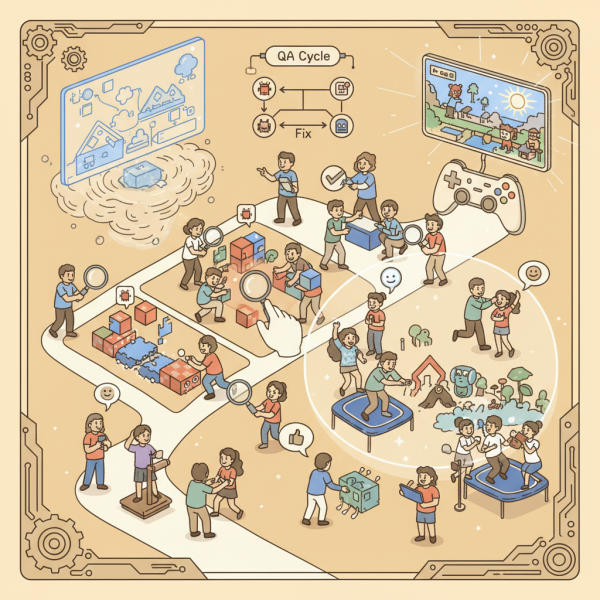
The Pillars of Polished Game Development
- -->> 9. The Pillars of Polished Game Development
What you'll learn
 Systematic Testing MethodologiesEffective Bug Fixing ProcessesLeveraging Player FeedbackIterative Game Refinement
The journey from a creative concept to a captivating playable experience is fraught with challenges. Among the most critical stages are Quality Assurance (QA) and playtesting, two indispensable processes that ensure a game not only functions as intended but also delivers an engaging and enjoyable experience for its audience. These phases are not mere afterthoughts; they are deeply integrated cycles of scrutiny, refinement, and user-centric evaluation, crucial for identifying flaws, balancing mechanics, and ultimately, elevating a game from good to truly exceptional.
The Cornerstone of Quality: Quality Assurance
Quality Assurance, often referred to simply as QA, is the systematic process of preventing mistakes and defects in game development. It encompasses a wide range of testing activities designed to verify that the game meets its specified requirements and performs reliably across various platforms and conditions. QA testers meticulously hunt for bugs, glitches, crashes, and other technical imperfections that could detract from the player's experience.
The QA process involves developing comprehensive test plans and executing detailed test cases. These cases outline specific functionalities, systems, and scenarios to be examined, ensuring that every aspect of the game, from core gameplay loops to obscure menu options, is thoroughly scrutinized. Reporting bugs accurately, with clear reproduction steps and severity levels, is paramount. This allows developers to efficiently address issues, preventing them from escalating into larger problems down the line.
The Art of Playtesting: Beyond Bug Hunting
While QA focuses primarily on the technical integrity and functionality of a game, playtesting shifts the focus to the player's subjective experience. Playtesting is about evaluating the game's design, usability, difficulty, pacing, and overall enjoyment. It seeks to answer questions like: Is the game fun? Is it intuitive? Is the difficulty curve appropriate? Do players understand the objectives?
Playtesters, who can range from internal team members to external target audience representatives, engage with the game as a typical player would. Their feedback is invaluable for understanding how the game's mechanics and narrative resonate with its audience. This process often uncovers issues related to game design, user interface/experience (UI/UX), balance, and player progression that pure technical testing might miss. It's an essential step in refining the core appeal and market readiness of a game.
Crafting Effective Testing Strategies
Thorough Testing Methodologies
Implementing a robust testing methodology is vital for comprehensive coverage. This involves a combination of different testing types throughout the development lifecycle:
- Functional Testing: Ensuring all game features work as intended.
- Performance Testing: Checking stability, frame rate, and load times under various conditions.
- Compatibility Testing: Verifying performance across different hardware, operating systems, and devices.
- Usability Testing: Evaluating the intuitiveness and ease of use of the game's interface and controls.
- Regression Testing: Re-running previous tests to ensure new changes haven't introduced new bugs or reintroduced old ones.
A mix of manual and automated testing is often employed. Manual testing allows for human intuition and exploration, while automated tests efficiently cover repetitive tasks and broad system checks, especially useful for regression testing.
Bug Fixing Workflow
An organized bug fixing workflow is crucial for efficiency. Once a bug is identified and reported, it enters a structured process:
- Triage and Prioritization: Bugs are assessed based on severity (e.g., critical, major, minor) and impact on the game, determining the order in which they should be fixed.
- Assignment: The bug is assigned to the relevant developer or team.
- Fixing: Developers implement a solution.
- Verification: QA re-tests the fix to ensure the bug is resolved and no new issues have been introduced.
- Closure: Once verified, the bug report is closed.
Clear communication between QA and development teams is paramount throughout this cycle, ensuring everyone understands the issues and their resolutions.
Comprehension questions
 What is the primary difference in focus between Quality Assurance (QA) and playtesting?Describe three specific testing methodologies mentioned in the article for comprehensive coverage.Outline the key stages involved in an organized bug fixing workflow.According to the article, why is playtesting considered 'beyond bug hunting'?
Community Poll
Next Lesson

Course Contents : Mobile Game Development: From Concept to Launch
- >> 9.
 The Pillars of Polished Game Development