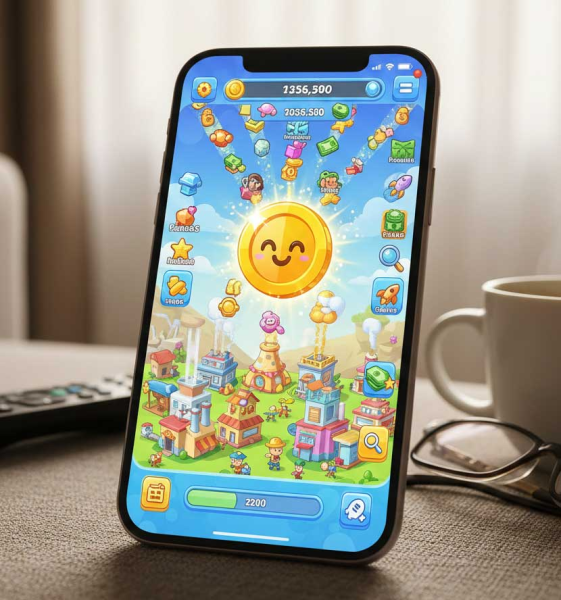
An Inside Look at the Idle Clicker Genre in Mobile Games
- -->> 2. An Inside Look at the Idle Clicker Genre in Mobile Games
What you'll learn
 Idle Clicker MechanicsDesign ChallengesPlayer Retention StrategiesSuccessful Features
Understanding the Idle Clicker Genre
The idle clicker genre has carved out a surprisingly robust niche within the mobile gaming landscape, captivating millions with its unique blend of minimal interaction and perpetual growth. For game designers and developers, understanding the core mechanics, psychological hooks, and inherent challenges of this genre is crucial. This article delves into what makes idle clickers distinct, the hurdles developers face, and the features that truly resonate with players, providing insights for those looking to innovate or refine their approach to passive gameplay.
What Defines an Idle Clicker?
At its heart, an idle clicker game is characterized by its emphasis on automation and passive progression. Players typically start by manually interacting with an element, often by tapping or clicking, to generate a currency or resource. This initial manual input quickly leads to the ability to purchase upgrades that automate the generation process, allowing resources to accrue even when the player is not actively engaged with the game.
The genre thrives on a continuous loop of earning, spending, upgrading, and then earning more efficiently. This cycle provides a constant sense of forward momentum and accomplishment, which is a powerful psychological driver. The game plays itself, to a degree, yet players feel integral to its optimization and growth.
Accessibility is another hallmark. Idle clickers often feature simple user interfaces and straightforward objectives, making them easy for new players to pick up. The low barrier to entry and the satisfaction of watching numbers increase make them appealing to a broad audience, from casual players to those seeking a more involved optimization puzzle.
Challenges in Idle Clicker Design
Despite their popularity, idle clicker games present several design challenges. Maintaining long-term player engagement is paramount. Without fresh content or compelling new mechanics, the repetitive core loop can quickly lead to player fatigue and churn.
Balancing progression speed is another delicate act. If progress is too slow, players may feel stuck or disengaged. If it's too fast, they might exhaust the content too quickly, diminishing the sense of achievement and the game's longevity. Striking this balance is critical for fostering a sustained interest.
Monetization must also be handled with care. While in-app purchases and advertisements are common, overly aggressive or poorly integrated monetization strategies can disrupt the player experience and lead to negative sentiment. The challenge lies in offering valuable optional purchases or ad views that genuinely enhance gameplay without feeling pay-to-win or intrusive.
Furthermore, many idle games struggle with a perceived lack of depth. Convincing players that there's more to the game than just watching numbers grow requires clever design, often involving strategic choices, diverse upgrade paths, and meaningful goals beyond simple resource accumulation.
Successful Features and Design Principles
Certain features and design philosophies have proven exceptionally effective in the idle clicker genre, contributing significantly to player retention and enjoyment. Integrating these elements thoughtfully can elevate an idle game from a fleeting diversion to a long-term engagement.
- Prestige/Rebirth Systems: These systems allow players to soft-reset their progress, often in exchange for a permanent, powerful bonus that accelerates future playthroughs. This mechanism provides a satisfying sense of meta-progression, keeps the early game fresh, and offers a strong incentive for repeated engagement.
- Offline Progress: Rewarding players with earned resources even when the app is closed is a cornerstone of the genre. It acknowledges players' time away from the game and offers a positive incentive to return, reinforcing the feeling of constant, effortless growth.
- Incremental Upgrades and Automation: The steady stream of small, achievable upgrades provides frequent dopamine hits. Gradually automating manual tasks shifts the player's focus from simple clicking to strategic management, adding depth and allowing for more complex decision-making.
- Visual and Auditory Feedback: Clear visual indicators of progress, such as expanding factories, growing empires, or increasing numbers, coupled with satisfying sound effects for actions and achievements, enhance the feeling of accomplishment and make the progression more tangible.
- Events and Limited-Time Content: Introducing temporary challenges, special resources, or unique rewards through events can break the routine, provide novel goals, and encourage players to log in regularly to participate and earn exclusive items.
- Strategic Depth through Research Trees or Talent Systems: Beyond simple linear upgrades, offering branching research trees or talent systems allows players to customize their progression path, adding a layer of strategic choice and replayability.
Well-integrated advertising, such as optional rewarded video ads for temporary boosts or resources, can be a non-intrusive way to generate revenue while offering tangible value to players. Similarly, judiciously placed in-app purchases for permanent multipliers or quality-of-life improvements are often well-received.
Summary
The idle clicker genre, though seemingly simple, is a masterclass in psychological design, leveraging human desires for progress and accumulation with minimal effort. For game developers, understanding its unique blend of passive gameplay, the delicate balance required for engagement and monetization, and the power of well-implemented features like prestige systems and offline progress is key. By embracing these principles, developers can craft compelling idle experiences that captivate players and stand the test of time in the competitive mobile market.
Comprehension questions
 What is the primary characteristic that defines an idle clicker game?What are two significant challenges game designers face when developing idle clicker games?Explain how a 'Prestige/Rebirth System' works and why it is beneficial in an idle clicker game.What role does 'Offline Progress' play in retaining players in the idle clicker genre?
Review Quiz
Next Lesson
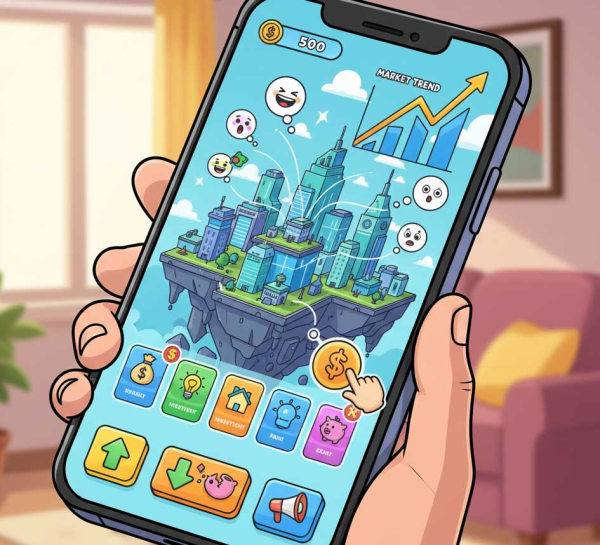
Course Contents : Exploring Different Mobile Game Genres
- >> 2.
 An Inside Look at the Idle Clicker Genre in Mobile Games