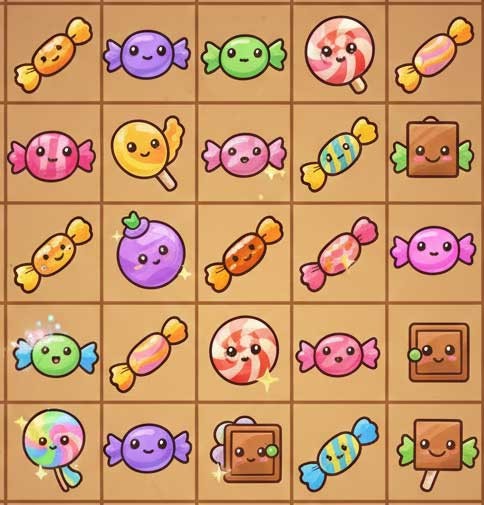
Deconstructing the Match 3 Genre
- -->> 6. Deconstructing the Match 3 Genre
What you'll learn
 The Enduring Appeal of Match 3Design Challenges in the Match 3 GenreFeatures That Drive SuccessSummary of the Match 3 Genre
Deconstructing the Match 3 Genre in Mobile Gaming
The Match 3 genre stands as a cornerstone of mobile video gaming. From casual time-killers to intricately designed narrative experiences, these games, at their core, involve swapping adjacent pieces on a grid to create lines or clusters of three or more identical items, which then disappear. For game designers and developers, understanding the deep-rooted appeal and inherent complexities of this seemingly simple mechanic is crucial for innovating within a highly competitive and often saturated market.
The Enduring Appeal of Match 3
What makes Match 3 games so profoundly unique and universally appealing? Their primary strength lies in their immediate accessibility and intuitive nature. The core mechanic is effortlessly grasped by players of all ages and technical proficiencies, requiring minimal tutorialization and cognitive load. This low barrier to entry fosters broad appeal, making them perfect for short play sessions on mobile devices.
Beyond simplicity, Match 3 games offer a compelling blend of chance and strategy. While random tile drops introduce an element of unpredictability, thoughtful planning and spatial reasoning are often required to achieve objectives, especially in more complex levels. The visual and auditory feedback loops – the satisfying 'pop' of matched tiles, cascading chain reactions, and vibrant animations – provide instant gratification, creating a dopamine rush that encourages continued play.
This genre excels at creating a sense of progression. Players constantly strive to clear levels, earn stars, and unlock new content. The inherent challenge, coupled with clear, achievable goals, provides a consistent sense of accomplishment that keeps players engaged and motivated to return.
Design Challenges in the Match 3 Genre
Despite their popularity, Match 3 games present several significant design and development hurdles:
- Player Retention and Engagement: While easy to pick up, retaining players long-term is a constant battle. Developers must continuously introduce novelty to prevent boredom and churn, moving beyond the core matching mechanic.
- Monetization Balancing: Most Match 3 games operate on a free-to-play model, relying on in-app purchases (IAPs). The challenge is to implement monetization strategies that feel fair and valuable, encouraging spending without alienating players or creating a 'pay-to-win' perception.
- Innovation vs. Familiarity: The market is flooded with Match 3 titles. Standing out requires genuine innovation in mechanics, art style, or meta-game, yet straying too far from established genre conventions can alienate the core audience.
- Content Treadmill: Players expect a steady stream of new levels, events, and features. Maintaining this content pipeline is resource-intensive and requires robust development and live ops teams.
- Technical Optimization: Ensuring smooth performance across a vast array of mobile devices, including older models, is crucial for a genre that relies on fluid animations and responsive touch controls.
Features That Drive Success
Successful Match 3 games often integrate features that elevate the experience beyond simple tile matching, addressing the challenges mentioned above and fostering deeper player investment.
A robust meta-game loop is arguably the most critical feature for long-term retention. This often takes the form of a secondary gameplay system layered on top of the Match 3 puzzles. Examples include:
- Narrative Progression: Players use stars or currency earned from puzzles to renovate homes, gardens, or cities (e.g., Homescapes, Gardenscapes), engaging with character stories and unlocking new areas.
- Collection Mechanics: Gathering resources, pets, or characters that offer passive bonuses or participate in separate mini-games.
- Base Building/Crafting: Using puzzle rewards to construct and upgrade structures, enhancing a persistent game world.
These meta-games provide a meaningful context for playing Match 3 levels, giving players a larger goal to work towards than just clearing the next board. They tap into fundamental human desires for creativity, ownership, and progression.
Beyond meta-games, the following features are vital:
Strategic Depth through Level Design: Introducing special tiles, blockers, multi-stage objectives, and limited moves transforms simple puzzles into strategic challenges. Power-ups and boosters, when implemented thoughtfully, offer players agency and tactical options, rewarding skillful play over pure luck.
Exceptional Visual and Audio Feedback: Crisp animations, vibrant effects for matches and power-up activations, and satisfying sound design are paramount. The sensory feedback reinforces successful actions and makes the core gameplay loop inherently enjoyable.
Social and Competitive Features: Leaderboards, guild systems, gifting mechanisms, and collaborative events can significantly boost engagement. These features tap into players' desire for connection, competition, and communal achievement.
Live Events and Regular Updates: Timed events, seasonal content, and daily challenges provide fresh reasons to play, offering exclusive rewards and keeping the game feeling dynamic and active.
Summary
The Match 3 genre, while seemingly straightforward, is a sophisticated ecosystem demanding careful design and continuous innovation. Its enduring appeal stems from intuitive mechanics, satisfying feedback, and accessible gameplay. However, developers face significant challenges in player retention, monetization, content delivery, and market differentiation. By incorporating robust meta-game loops, thoughtful level design, compelling audiovisual feedback, and engaging social features, developers can create highly successful and enduring Match 3 experiences that resonate deeply with a global audience of mobile gamers.
Comprehension questions
 What are the primary reasons for the universal appeal and accessibility of Match 3 games?Name three significant design and development challenges faced by Match 3 game developers.How do "meta-game loops" contribute to long-term player retention in Match 3 games, and what are some examples?Besides meta-game loops, what other features are vital for successful Match 3 games according to the article?
Community Poll
Next Lesson

Course Contents : Exploring Different Mobile Game Genres
- >> 6.
 Deconstructing the Match 3 Genre