Introduction to Player Experience Usability Testing
- -->> 7. Introduction to Player Experience Usability Testing
What you'll learn
 Defining Player Experience (PX) Usability TestingKey Aspects of Intuitiveness and Ease of UseMeasuring Player SatisfactionMethods for Observation and Feedback
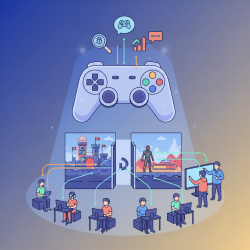
The true measure of a game's success often lies in how players experience it. This is where Usability Testing, with a strong focus on Player Experience (PX), becomes indispensable. It's a systematic approach to evaluating a game's intuitiveness, ease of use, and overall player satisfaction, moving beyond mere bug detection to deeply understand how players interact with and feel about the product. By observing real players and gathering their direct feedback, developers can uncover friction points, identify areas of confusion, and pinpoint opportunities to enhance enjoyment, ensuring the game resonates positively with its target audience.
What is Player Experience (PX) Usability Testing?
Player Experience Usability Testing is a specialized form of usability testing tailored for interactive entertainment. It focuses on the qualitative and quantitative aspects of a player's interaction with a game. The primary goal is not just to see if a feature works, but how well it works from the player's perspective, how easily they can understand it, and how much they enjoy the process. This involves a holistic assessment of the entire gameplay loop, from onboarding and tutorials to complex mechanics and long-term engagement.
Understanding player experience means delving into cognitive load, emotional responses, and motivational factors. It's about designing an experience that is not only functional but also engaging, rewarding, and clear. A successful game, in this context, minimizes frustration and maximizes fun.
Key Aspects of Intuitiveness and Ease of Use
Assessing a game's intuitiveness and ease of use is fundamental to PX usability testing. These aspects directly impact player retention and initial impressions.
- Learnability: How easily can new players understand the game's core mechanics, controls, and objectives without extensive tutorials or external help? This includes UI comprehension, icon recognition, and initial navigation.
- Navigation: Can players easily find what they are looking for within menus, maps, and game environments? Is the flow logical? Do they get lost or struggle to move between different game states or areas?
- Core Mechanics: Are the primary gameplay loops and interactions clear, responsive, and satisfying? Do players understand the cause and effect of their actions? Are controls intuitive and responsive?
Each of these areas contributes significantly to whether a player feels competent and in control, rather than overwhelmed or confused. A game that is intuitive and easy to use allows players to focus on the fun and challenge, not on fighting the interface or controls.
Measuring Player Satisfaction
Player satisfaction goes beyond simply completing tasks; it encompasses the emotional and psychological impact of the game. It’s about enjoyment, engagement, and the overall feeling a player has during and after playing.
- Engagement Levels: How deeply involved do players become in the game? Are they motivated to continue playing? Do they exhibit signs of flow state, where time seems to disappear? This can be observed through sustained play sessions and visible immersion.
- Emotional Response: What emotions does the game evoke? Is it fun, challenging, relaxing, thrilling, or frustrating? Observing facial expressions, body language, and listening to verbalized feelings provides crucial insight into emotional impact.
- Overall Enjoyment: At the end of a session, do players express a positive sentiment towards the game? Would they recommend it to others? This summative feedback is vital for understanding the holistic player experience.
Measuring satisfaction often requires a combination of observation and direct questioning, as players may not always articulate their deepest feelings without prompting.
Methods for Observation and Feedback
Gathering rich data requires employing various techniques that capture both explicit feedback and implicit behaviors.
- Direct Observation: Testers are watched in real-time or recorded as they play. This allows researchers to see exactly where players struggle, hesitate, or become confused, without interrupting their experience.
- Think-Aloud Protocols: Players are encouraged to vocalize their thoughts, feelings, and intentions as they interact with the game. This provides direct insight into their cognitive process, revealing assumptions, questions, and problem-solving strategies.
- Surveys and Questionnaires: Structured questions administered before or after gameplay sessions can gather quantitative data on satisfaction, perceived difficulty, feature preferences, and demographic information.
- Interviews: One-on-one conversations with players can delve deeper into their experiences, exploring specific pain points or moments of delight in more detail than a survey allows.
Combining these methods offers a comprehensive view of player behavior and sentiment, helping to triangulate findings and build a robust understanding.
Setting Up a Usability Test
Effective usability testing requires careful planning and execution.
Defining Objectives: Clearly outline what specific aspects of the game you want to test and what questions you hope to answer. Are you testing the tutorial, a new mechanic, or the end-game loop?
Recruiting Participants: Select players who represent your target audience. Consider age, gaming experience, and genre familiarity. A diverse group can provide broader perspectives.
Task Design: Create a series of realistic tasks that participants will perform. These tasks should be specific enough to guide their interaction but open-ended enough to allow for natural exploration.
Environment Setup: Ensure a comfortable, distraction-free testing environment. Provide necessary equipment, stable internet, and clear instructions. Recordings of screen, audio, and participant's face can be invaluable.
Analyzing and Implementing Findings
The data collected during testing is only valuable if it can be transformed into actionable insights that lead to improvements.
Data Synthesis: Compile observations, feedback, and metrics. Look for patterns, recurring issues, and common themes across different participants. Prioritize issues based on severity and frequency.
Prioritization: Not all issues are created equal. Focus on critical usability blockers that severely impact the player experience or prevent progression before addressing minor annoyances.
Iterative Design: Usability testing is rarely a one-off event. Implement changes based on findings, then retest to validate improvements and uncover new issues. This continuous loop of testing, analyzing, and refining is essential for long-term success.
Summary
Usability testing with a player experience focus is a cornerstone of modern game development, moving beyond technical functionality to prioritize how players feel and interact with a game. It involves systematically assessing a game's intuitiveness, ease of use, and overall player satisfaction through a combination of direct observation and various feedback mechanisms like think-aloud protocols, surveys, and interviews. By understanding learnability, navigation, core mechanics, engagement, and emotional responses, developers can identify crucial areas for improvement. Setting up a test involves defining clear objectives, recruiting appropriate participants, designing specific tasks, and preparing a suitable testing environment. The insights gained from these tests are then analyzed, prioritized, and fed back into an iterative design process, ensuring the game evolves into a truly enjoyable and engaging experience for its audience.
Comprehension questions
 What is the primary goal of Player Experience (PX) Usability Testing in game development?Name and describe three key aspects considered when assessing a game's intuitiveness and ease of use.Beyond simply completing tasks, what aspects does player satisfaction encompass, and how is it measured?Describe two methods mentioned in the article for gathering player feedback during usability testing.
Community Poll
Next Lesson
Course Contents : Mobile Game Testing Strategies
- >> 7.
 Introduction to Player Experience Usability Testing