How Non-Competitive Systems Build Daily Habits
- -->> 2. How Non-Competitive Systems Build Daily Habits
What you'll learn
 Non-Competitive Interaction DesignHabit Formation through Social SystemsCommunity Building via ReciprocityThe Psychology of Low-Friction Engagement
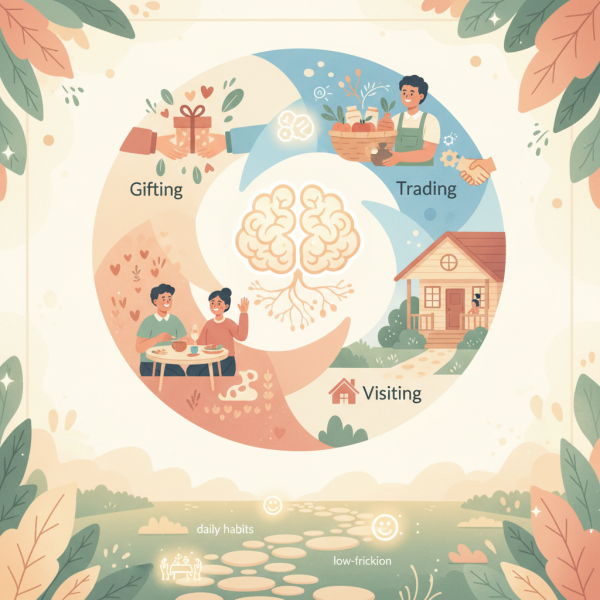
In a world often driven by competition, where success is frequently measured by individual achievement against others, there exists a powerful, yet often overlooked, category of human interaction: non-competitive systems. These include simple acts like gifting, trading, and visiting. Unlike zero-sum games, these interactions are designed for mutual benefit, fostering connection and reciprocity rather than rivalry. This article delves into the design principles of these 'low-friction' systems and explores how their inherent ease and positive outcomes are instrumental in building sustained daily habits, strengthening social bonds, and enriching personal well-being.
The Essence of Non-Competitive Interactions
Non-competitive interactions are characterized by an absence of direct rivalry. Participants engage with the understanding that their actions contribute to a shared positive outcome or provide a benefit that is not at another's expense. The focus shifts from winning to connecting, from accumulating to sharing. This fundamental difference dramatically alters the psychological landscape of engagement, reducing stress and encouraging repeat participation.
These systems often thrive on a sense of community and interdependence. They acknowledge that individuals are part of a larger social fabric and that collective well-being enhances individual experiences. The design intentionally minimizes barriers to entry, making it easy for anyone to participate and contribute, regardless of their skill level or resources.
Gifting as a Foundation of Connection
Gifting, in its purest form, is a unilateral act of generosity. While it might seem simple, it carries profound social implications. It initiates a cycle of reciprocity, not necessarily demanding an immediate return, but fostering a sense of obligation and goodwill that strengthens relationships over time. A small gift, a thoughtful gesture, can transform an interaction from transactional to relational.
The act of giving can become a powerful daily habit, whether it's offering a compliment, sharing a meal, or lending a listening ear. These small, frequent acts reinforce a generous mindset and build a network of support. The low-friction nature means that the effort required to give is often minimal compared to the positive impact it creates, making it an easy habit to adopt and maintain.
Trading: Beyond Transaction to Relationship
Unlike purely commercial transactions, non-competitive trading often involves an exchange of goods, services, or knowledge where the value is perceived as equitable, even if not precisely monetized. It's less about profit maximization and more about meeting needs and utilizing available resources within a community. This type of trading builds trust and mutual respect between participants.
Consider bartering skills or sharing surplus produce. These exchanges are often accompanied by conversation, shared laughter, and a deeper understanding of each other's lives. The repeated engagement in such trades transforms strangers into acquaintances, and acquaintances into trusted allies, establishing patterns of collaborative exchange that become regular fixtures in daily life.
Visiting: The Power of Presence
Simply visiting someone, whether a neighbor, a friend, or a family member, is a fundamental non-competitive interaction. It's an investment of time and presence that signals care and builds social capital. There's no scorekeeping or competitive objective; the goal is connection, shared experience, and mutual enjoyment.
Regular visits, even brief ones, solidify social networks and provide invaluable emotional support. They create opportunities for spontaneous help, shared news, and collective memory-making. The low-friction aspect means that a quick coffee, a short chat over the fence, or an impromptu invitation requires minimal planning but yields significant relational rewards, making it a sustainable social habit.
Low-Friction Design Principles
The success of these systems in habit formation can be attributed to several key design principles:
- Clear, Simple Intent: The purpose of the interaction (to connect, to help, to share) is immediately understandable, requiring no complex rules or strategies.
- Low Barrier to Entry: Participation is easy, requiring minimal effort, cost, or specialized skill. Anyone can engage.
- Immediate Positive Feedback: The emotional rewards of connection, gratitude, or shared joy are often felt immediately, reinforcing the behavior.
- Mutual Benefit: All parties involved derive some form of value, ensuring sustained engagement and a sense of fairness.
- Flexibility and Adaptability: These interactions can be tailored to individual needs and circumstances, making them highly resilient and scalable.
Building Daily Habits Through Gentle Engagement
The gentle, positive reinforcement inherent in non-competitive systems is highly effective for habit building. Unlike competitive challenges that can lead to burnout or disengagement if one 'loses,' these interactions consistently offer positive outcomes. This fosters a sense of psychological safety, encouraging repeated engagement and embedding the behavior into daily routines.
Over time, these seemingly small interactions accumulate to form robust social habits that underpin strong communities and personal well-being. They shift our focus from individual gain to collective flourishing, demonstrating that some of the most profound impacts come from the simplest, most human-centric designs.
Conclusion
Non-competitive systems like gifting, trading, and visiting are powerful yet understated mechanisms for fostering human connection and building enduring daily habits. By emphasizing mutual benefit, reducing friction, and providing intrinsic rewards, these interactions bypass the anxieties of competition, leading to more consistent and joyful engagement. Understanding and intentionally cultivating such systems can enrich our personal lives, strengthen our communities, and create a more collaborative and supportive world, one gentle interaction at a time.
Comprehension questions
 What defines a non-competitive system, and how does it differ from competitive interactions?How does the act of gifting contribute to building social connections and daily habits?What are some key design principles that make non-competitive systems effective for habit formation?In what ways do non-competitive trading and visiting interactions strengthen community bonds and personal well-being?
Review Quiz
Next Lesson
Course Contents : Social and Competitive Game Play Design
- >> 2.
 How Non-Competitive Systems Build Daily Habits