How Tank, Healer, and Damage Forge Teamwork
- -->> 5. How Tank, Healer, and Damage Forge Teamwork
What you'll learn
 Role-playing archetypesCooperative game designTeam communication strategiesPlayer interdependence dynamics
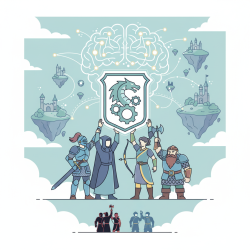
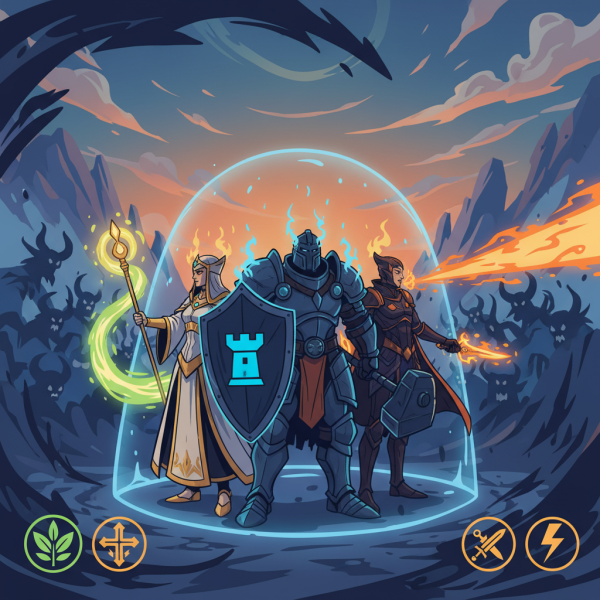
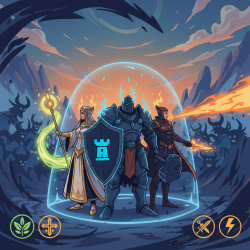
In the vast landscapes of cooperative video games, particularly those within the MMORPG and dungeon-crawler genres, a foundational design principle often dictates the structure of player groups: the "Tank, Healer, Damage" (THD) trinity. This archetypal system assigns distinct yet complementary roles to players, creating a powerful ecosystem where individual specializations are woven into a tapestry of collective strength. Far from being arbitrary distinctions, these roles are meticulously crafted to foster an environment of profound interdependence, compelling players to engage in constant communication and sophisticated strategizing to overcome obstacles and achieve shared objectives.
Understanding the Core Trinity
The Tank, Healer, Damage paradigm is more than just a convenient grouping; it is a fundamental pillar of cooperative game design. Each role serves a critical purpose that, when combined effectively, allows a team to tackle challenges far exceeding the capabilities of any single player. This symbiotic relationship is the engine that drives progression in countless virtual worlds.
The Tank: The Unyielding Vanguard
- The Tank's primary function is to absorb incoming damage and maintain "aggro," or enemy attention, diverting attacks away from more fragile teammates.
- They are typically characterized by high health pools, robust defensive abilities, and often crowd control skills that mitigate threats.
- Effective tanking requires keen awareness of enemy positioning, ability timers, and team vulnerabilities.
The Healer: The Sustaining Lifeline
- Healers are responsible for restoring health and removing detrimental effects from allies, ensuring the team's longevity in combat.
- They possess a repertoire of healing spells, protective buffs, and sometimes even offensive capabilities to assist when healing demands are low.
- A good healer anticipates damage, manages resources, and prioritizes targets to keep the most vulnerable members alive.
The Damage Dealer (DPS): The Offensive Powerhouse
- Damage dealers, often referred to as DPS (Damage Per Second), focus on inflicting maximum harm upon enemies to defeat them quickly.
- They come in various forms – melee, ranged, magical – each with unique rotations and burst capabilities designed for optimal output.
- Successful DPS players understand boss mechanics, exploit weaknesses, and coordinate their offensive abilities to maximize efficiency.
The Interdependence Dynamic
The genius of the THD system lies in its inherent interdependence. No single role can realistically succeed without the others, especially in challenging content. A tank, no matter how sturdy, will eventually fall without consistent healing. Healers cannot keep a team alive if damage dealers fail to eliminate threats quickly enough, or if the tank fails to hold aggro. Similarly, damage dealers are utterly vulnerable without the tank's protection and the healer's sustained support.
This reciprocal reliance transforms individual performance into a collective responsibility. A minor error from one player can rapidly cascade into a team wipe, making vigilance and coordination paramount. It cultivates a sense of shared fate, where everyone's success is tied directly to the performance and survival of their teammates.
Communication as the Cornerstone
Given this high degree of interdependence, communication ceases to be a luxury and becomes an absolute necessity. Players must constantly exchange information, both verbally and through in-game cues, to adapt to dynamic combat situations. Effective communication channels the individual efforts into a synchronized attack or defense.
Examples of crucial communication include:
- Tank Call-outs: Announcing target changes, incoming large attacks, or movement instructions.
- Healer Warnings: Alerting the team to low mana, impending crowd control, or requesting damage reduction from the tank.
- DPS Coordination: Calling out focus targets, coordinating burst damage phases, or identifying interrupts for enemy abilities.
- General Awareness: Players identifying environmental hazards or unexpected enemy spawns for the entire team.
This continuous dialogue ensures that everyone is on the same page, anticipating threats, and reacting cohesively. It builds trust and familiarity within a group, transforming disparate individuals into a formidable unit.
Strategic Planning and Execution
Beyond immediate communication, the THD archetypes necessitate extensive strategic planning. Before engaging challenging encounters, teams often discuss tactics, role assignments, and contingency plans. This pre-combat strategy sets the foundation for successful execution.
Strategic elements include:
- Pull Strategy: How and when the tank will engage enemies, considering line-of-sight and group size.
- Ability Rotation: Optimizing the sequence of offensive and defensive skills for maximum impact and resource efficiency.
- Interrupt Assignments: Designating specific players to interrupt critical enemy spells or abilities.
- Positioning: Deciding where each role should stand to maximize effectiveness while minimizing personal risk and aiding line-of-sight for healers.
- Resource Management: Planning cooldown usage and mana expenditure across the team to sustain long fights.
During an encounter, strategies must often be adapted on the fly due to unforeseen circumstances or player errors. This fluid adaptation, guided by swift communication, showcases the true depth of teamwork fostered by the THD system.
Beyond the Battlefield
The impact of the "Tank, Healer, Damage" trinity extends beyond mere in-game mechanics; it cultivates valuable soft skills. Players learn patience, empathy, leadership, and followership. They experience the satisfaction of contributing to a greater whole and the frustration of failure, which often drives them to improve their teamwork. This system inherently encourages a sense of community, as players seek out reliable teammates and form lasting bonds born from shared victories and overcoming adversity.
Conclusion
The "Tank, Healer, Damage" archetypes are a testament to elegant game design, creating a framework where specialized roles become profoundly interdependent. This system inherently demands a high level of communication and strategic collaboration, transforming individual players into a cohesive unit working towards shared goals. Through the dedicated efforts of tanks protecting, healers sustaining, and damage dealers eliminating threats, teams learn to synchronize their actions, adapt to challenges, and ultimately achieve success in the most demanding virtual environments. The enduring power of this trinity lies in its ability to consistently foster genuine teamwork and memorable cooperative experiences.
Comprehension questions
 What are the primary responsibilities of a Tank in the 'Tank, Healer, Damage' trinity?How does the concept of interdependence explain why no single role can succeed without the others in the THD system?According to the article, why is communication an absolute necessity in the THD system, and what types of call-outs are important for each role?Beyond immediate communication, what strategic elements do teams often discuss and adapt when utilizing the THD archetypes in challenging encounters?
Community Poll
Next Lesson
Course Contents : Social and Competitive Game Play Design
- >> 5.
 How Tank, Healer, and Damage Forge Teamwork