Synchronous vs. Asynchronous Competitive Play
- -->> 3. Synchronous vs. Asynchronous Competitive Play
What you'll learn
 Synchronous Play MechanicsAsynchronous Play MechanicsGenre SuitabilityPlayer Experience Design
The landscape of competitive mobile gaming is incredibly diverse, offering players myriad ways to test their skills against others. At the heart of this competition lie two fundamental models of interaction: synchronous and asynchronous play. Understanding the nuances between these approaches is not merely an academic exercise; it is critical for game developers to select the model that best aligns with their game's mechanics, target audience, and ultimately, its long-term success. Each model presents unique opportunities and challenges, deeply influencing everything from game design and technical infrastructure to player engagement and monetization strategies.
Understanding Synchronous Competitive Play
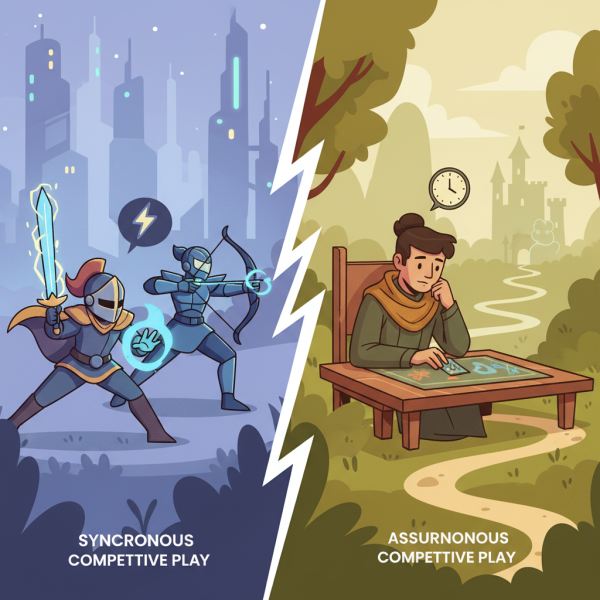
Synchronous competitive play is characterized by real-time, simultaneous interaction between players. In this model, every participant is actively engaged at the same moment, making decisions and reacting to opponents' actions in an immediate timeframe. This direct, moment-to-moment confrontation creates an intensely dynamic and often exhilarating experience, demanding quick reflexes, strategic thinking, and constant adaptation.
Examples of mobile genres that thrive on synchronous play include Multiplayer Online Battle Arenas (MOBAs) like Mobile Legends: Bang Bang, Battle Royales such as PUBG Mobile, and real-time strategy duels like Clash Royale. The appeal here lies in the immediacy of the rivalry and the thrill of outmaneuvering a live opponent.
Advantages of Synchronous Play:
- Intense Excitement: The real-time nature generates high stakes and adrenaline-pumping moments.
- Direct Rivalry: Players feel a strong sense of competition against a visible, active opponent.
- Social Interaction: Often fosters team play and communication, enhancing the social aspect of gaming.
Disadvantages of Synchronous Play:
- Latency Issues: Requires stable network connections; lag can severely impact gameplay fairness.
- Scheduling Conflicts: Demands players to be available at the same time, which can be challenging on mobile.
- Higher Skill Barrier: The need for quick reactions can alienate casual players.
- Potential for Toxicity: Direct interaction can sometimes lead to negative player behavior.
Understanding Asynchronous Competitive Play
In contrast, asynchronous competitive play does not require simultaneous presence. Instead, players take turns or complete actions independently, with the system processing these interactions over time. This model often involves competing against a recorded performance, an AI representation of another player, or interacting with persistent game states left by other players. It prioritizes flexibility and strategic depth over immediate reaction.
Common examples include turn-based card battlers like Hearthstone and Marvel Snap, base-building and raiding games such such as Clash of Clans, and many daily challenge or leaderboard-based puzzle games. The core appeal of asynchronous play is its ability to fit seamlessly into busy mobile lifestyles, allowing players to progress and compete at their own pace.
Comprehension questions
 What are the key distinctions between synchronous and asynchronous competitive play in mobile games?Provide two examples of mobile game genres that are best suited for synchronous competitive play and explain why.How does asynchronous competitive play address common challenges found in synchronous models, particularly for mobile users?Describe a hybrid approach to competitive play and identify its potential benefits for mobile game developers.
Community Poll
Next Lesson

Course Contents : Social and Competitive Game Play Design
- >> 3.
 Synchronous vs. Asynchronous Competitive Play