Environmental Storytelling and Visual Shorthand
- -->> 2. Environmental Storytelling and Visual Shorthand
What you'll learn
 Understanding Environmental StorytellingThe Efficacy of Visual ShorthandCore Techniques and PrinciplesDesigning for Immersion and Narrative Depth
Environmental storytelling and visual shorthand are powerful, often understated, techniques employed across various media, particularly in video games, film, and interactive experiences. These methods involve conveying narrative, character traits, historical context, and immediate circumstances not through explicit dialogue or cutscenes, but through the subtle arrangement and depiction of the environment itself. By carefully crafting the world around the audience, creators can foster a deeper connection and understanding, allowing players or viewers to piece together information organically and immerse themselves more fully in the created reality.
What is Environmental Storytelling?
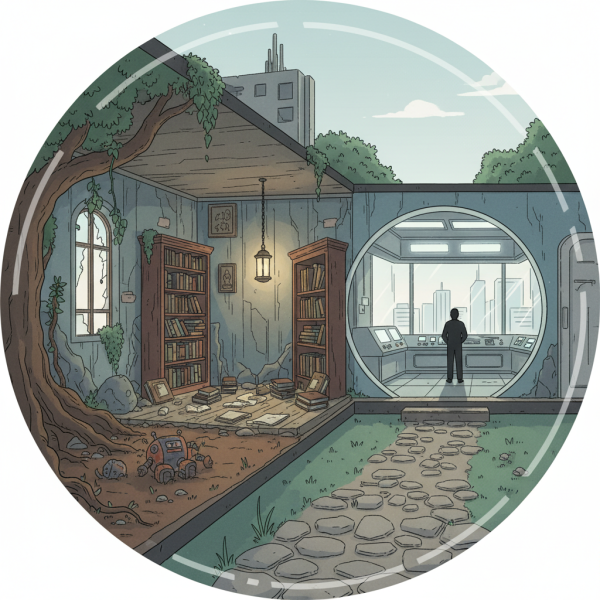
Environmental storytelling is the art of using the setting to tell a story. It's about showing, not telling, allowing the audience to infer events, character motivations, and world history simply by observing the surroundings. A dilapidated building might suggest abandonment and decay, while a carefully maintained garden hints at someone's presence and care. These environmental cues are not just decorative; they are integral parts of the narrative fabric.
This approach relies on the audience's innate curiosity and ability to interpret visual information. It transforms passive observation into an active act of discovery, making the audience feel like an archaeologist uncovering layers of history or a detective piecing together clues. The world itself becomes a silent narrator, whispering tales through its scars, its grandeur, and its everyday objects.
The Power of Visual Shorthand
Visual shorthand refers to the use of universally understood symbols, archetypes, or established visual conventions to quickly communicate complex ideas or information. In environmental storytelling, this means employing elements that instantly convey meaning without requiring lengthy explanations. A flickering light implies danger or malfunction, a worn path suggests frequent travel, and a certain type of architecture can immediately place a scene in a specific time period or culture.
This technique is vital for efficiency in communication. In fast-paced media, creators don't always have the luxury of extended exposition. Visual shorthand allows for immediate understanding, streamlining the narrative flow and preventing the audience from getting bogged down in unnecessary details. It leverages shared cultural knowledge and common sense to build context rapidly.
Techniques and Principles
Effective environmental storytelling utilizes a range of techniques to imbue spaces with narrative depth. These principles guide designers in crafting meaningful environments:
- Juxtaposition: Placing contrasting elements together to highlight differences or imply conflict. For example, a pristine child's toy lying amidst rubble.
- Layering: Building up details over time, showing the effects of various events and inhabitants on a space. A single room might show signs of multiple eras of occupation.
- Progression/Regression: Illustrating change over time, such as a building falling into disrepair or a natural area reclaiming human structures.
- Character Reflection: Designing environments that mirror the personality, status, or history of their occupants. A messy artist's studio versus a minimalist executive office.
- Cause and Effect: Presenting visual evidence of past actions, like a broken window suggesting a struggle or a hastily abandoned meal implying a sudden departure.
Impact on Immersion and Narrative Depth
When done well, environmental storytelling significantly enhances immersion. By allowing the audience to discover the narrative through observation, it fosters a sense of agency and personal connection to the world. It makes the setting feel lived-in, authentic, and responsive to events, rather than just a backdrop.
This method also deepens the narrative by adding layers of subtext and nuance that explicit storytelling might miss. It encourages speculation and interpretation, inviting the audience to engage with the story on a more intellectual and emotional level. The stories told by environments are often more resonant because they feel discovered rather than merely presented.
Designing Effective Environments
Creating environments rich in narrative requires careful consideration and planning. It's not just about placing random objects; every element should serve a purpose in contributing to the overarching story or characterization. Here are key considerations:
- Intentionality: Every detail, no matter how small, should be placed with purpose. Nothing should be accidental if it is meant to convey meaning.
- Readability: The visual cues should be clear enough for the target audience to interpret, without being overly obvious or requiring prior obscure knowledge.
- Consistency: The visual language and narrative hints should remain consistent with the world's lore and established rules.
- Context: The meaning of an object or arrangement often depends on its surrounding context. A single shoe might mean little, but a single shoe on a beach next to a shipwreck tells a different story.
Summary
In conclusion, environmental storytelling, supported by the efficient communication of visual shorthand, is a profound method for delivering narrative and building believable worlds. It empowers creators to communicate complex ideas subtly through the arrangement and detail of a space, fostering a deeper sense of immersion and discovery for the audience. By understanding and applying these techniques, designers can craft experiences where the environment itself becomes a vibrant, silent narrator, inviting profound engagement without the need for overt exposition.
Comprehension questions
 What is the fundamental concept of environmental storytelling and how does it differ from explicit narrative?How does visual shorthand enhance communication efficiency in narrative-driven media?Name and briefly explain at least three techniques or principles used in effective environmental storytelling.According to the article, what are the key considerations for designing environments that are rich in narrative?
Community Poll
Next Lesson

Course Contents : Narrative Design for Micro-Moments
- >> 2.
 Environmental Storytelling and Visual Shorthand