Writing Clear, Concise, and Unambiguous Requirements
- -->> 9. Writing Clear, Concise, and Unambiguous Requirements
What you'll learn
 Clarity in RequirementsConciseness in DocumentationUnambiguity in SpecificationActionable Requirement Writing
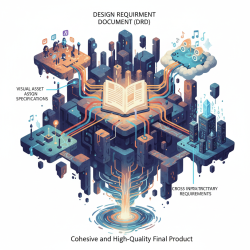
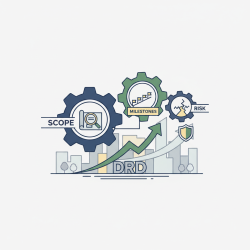
Requirements serve as the blueprint for success. They define what needs to be built, why it's important, and how it will deliver value. However, poorly written requirements often lead to misinterpretations, scope creep, rework, and ultimately, project delays and failures. Mastering the art of writing clear, concise, and unambiguous requirements is not just a best practice; it is a critical skill that directly impacts efficiency, reduces risks, and ensures that the final product aligns perfectly with stakeholder expectations. This article will delve into essential techniques to craft actionable requirements that leave no room for doubt and streamline the entire development lifecycle.
The Foundation: Why Clarity Matters
Vague or incomplete requirements are a primary source of friction in any project. When requirements lack clarity, different team members can interpret them in various ways. This divergence in understanding can lead to developers building features that don't meet user needs, testers struggling to validate functionality, and project managers facing constant scope adjustments. The cost of fixing errors detected late in the development cycle, or worse, after deployment, is significantly higher than addressing them during the requirements gathering phase. Investing time upfront in precise articulation pays dividends throughout the project.
Techniques for Achieving Clarity
Clarity is the cornerstone of effective requirements. It ensures that every stakeholder, from business analysts to engineers, has a shared understanding of what is expected.
Use Simple Language: Avoid overly complex sentence structures or convoluted phrasing. Opt for direct, straightforward language that conveys the meaning without needing re-reading. Imagine explaining the requirement to someone outside your immediate domain.
Avoid Jargon and Acronyms: While specific technical jargon might be necessary at times, ensure it is either universally understood within the project context or clearly defined. Acronyms should always be spelled out on first use, followed by the acronym in parentheses.
Define Terms: Create a glossary of terms for the project. This central repository ensures consistency in terminology and prevents confusion arising from different interpretations of key words or phrases.
Embracing Conciseness
Conciseness in requirements means getting straight to the point without sacrificing necessary detail. It's about efficiency in communication.
Eliminate Redundancy: Review your requirements for repetition. If a concept is stated multiple times in different ways, consolidate it. Each requirement should ideally convey unique information.
Focus on "What," Not "How": Requirements should describe the desired outcome or functionality ("what" the system must do), rather than dictating the implementation details ("how" it should be done). This allows technical teams the flexibility to innovate and apply the most appropriate solutions.
The "Single Idea" Rule: Each requirement statement should ideally express only one distinct idea or atomic piece of functionality. This makes requirements easier to understand, implement, and test independently.
Eliminating Ambiguity
Ambiguity is the enemy of precise requirements. It introduces uncertainty and opens the door for multiple interpretations, which can derail a project.
Quantify and Qualify: Whenever possible, use measurable terms. Instead of "the system should be fast," specify "the system shall respond to user queries within 2 seconds 95% of the time." Use clear qualifiers like "all," "none," "always," "never" carefully and consistently.
Use Active Voice: Active voice makes it clear who is responsible for what action. For example, "The system shall display customer information" is clearer than "Customer information will be displayed by the system."
Test for Ambiguity: A simple technique is to ask yourself, "Could this requirement be interpreted in more than one way?" If the answer is yes, rewrite it. Peer reviews are also invaluable for catching ambiguities.
Specificity is Key:
- Be precise with numbers and units (e.g., "5 MB" instead of "a small file").
- Avoid vague adjectives and adverbs (e.g., "user-friendly," "robust," "efficient"). Replace them with concrete, measurable criteria.
- Specify conditions, constraints, and exceptions explicitly.
- Use consistent terminology throughout the document.
Actionable Requirements: Making Them Testable
A truly actionable requirement is one that can be verified and validated. If a requirement cannot be tested, how can you confirm it has been met?
Verify and Validate: Verification ensures that the product is built correctly according to the requirements. Validation ensures that the correct product is built, meaning it meets the user's actual needs. Requirements should be formulated with both in mind.
SMART Criteria: Each requirement should ideally adhere to the SMART criteria:
- Specific: Clearly defined, not general.
- Measurable: Quantifiable, allowing for objective assessment.
- Achievable: Realistic and attainable within project constraints.
- Relevant: Aligns with project goals and stakeholder needs.
- Time-bound: Has a defined timeline or deadline (though this is more for project goals, it can apply to requirement implementation phases).
The Role of Stakeholder Collaboration
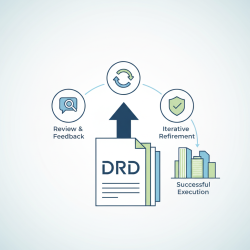
Writing excellent requirements is not a solitary task. It demands active collaboration with all relevant stakeholders. Regularly engage with end-users, product owners, developers, and testers to gather input, clarify doubts, and validate interpretations. Workshops, prototyping, and review sessions are effective methods to ensure everyone is on the same page. This iterative process helps catch misunderstandings early and fosters a sense of shared ownership, significantly contributing to the clarity and accuracy of the final requirement set.
Conclusion
Crafting clear, concise, and unambiguous requirements is fundamental to successful project delivery. By employing simple language, eliminating redundancy, quantifying details, and ensuring testability, teams can significantly reduce misinterpretations and streamline the development process. Proactive engagement with stakeholders further solidifies understanding and alignment, ultimately leading to higher quality products delivered on time and within budget, effectively transforming development blueprints into successful realities.
Comprehension questions
 Why are vague or incomplete requirements considered a primary source of friction in projects?How can one test for ambiguity in a requirement statement?Explain the SMART criteria for actionable requirements.
Community Poll
Next Lesson

Course Contents : The Design Requirements Document
- >> 9.
 Writing Clear, Concise, and Unambiguous Requirements