Scope, Milestones, and Risk Management in Your DRD
- -->> 8. Scope, Milestones, and Risk Management in Your DRD
What you'll learn
 Project Scope DefinitionMilestone PlanningRisk IdentificationMitigation Strategies
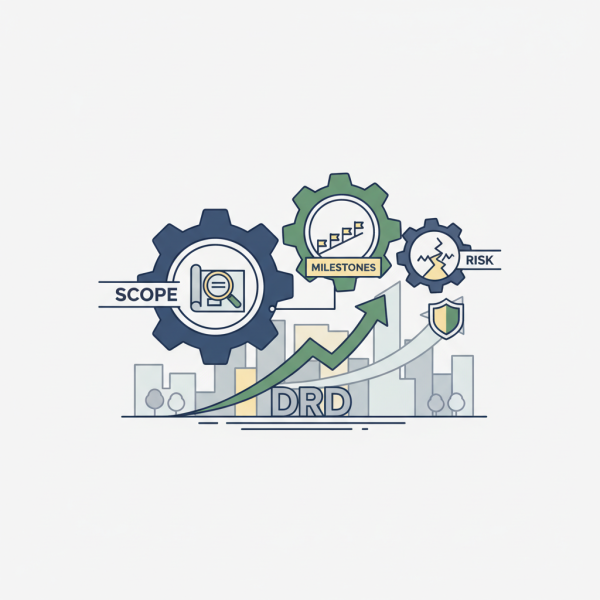
Successful project execution hinges on a triad of foundational elements: meticulously defined project scope, strategically planned milestones, and a robust framework for risk management. Within the context of a Design Reference Document (DRD), these components are not merely administrative tasks; they are critical blueprints that guide development, anticipate challenges, and ultimately determine a project's trajectory toward success. Understanding how to establish clear boundaries, outline development phases, and identify potential risks from the outset is paramount for any endeavor, preventing costly missteps and ensuring resources are optimally utilized.
Defining Project Scope
Project scope is the bedrock upon which all other project activities are built. It clearly delineates what is included in the project and, just as importantly, what is excluded. A well-defined scope acts as a contract, managing expectations among stakeholders and providing a clear focus for the development team. Without it, projects can easily drift, leading to budget overruns, missed deadlines, and stakeholder dissatisfaction.
What is Project Scope?
At its core, project scope defines the boundaries of a project, specifying the deliverables, features, functions, tasks, and resources required to achieve the project's objectives. It provides a detailed understanding of the project's ultimate goals and the work necessary to reach them. This definition should be precise, measurable, achievable, relevant, and time-bound (SMART).
Elements of a Well-Defined Scope
- Project Objectives: Clear, concise statements of what the project aims to achieve.
- Deliverables: Specific, tangible outputs that will be produced during the project.
- Requirements: Functional and non-functional specifications that the deliverables must meet.
- Exclusions: Explicit statements of what the project will not include, preventing scope creep.
- Constraints: Limiting factors such as budget, timeline, resources, or technology.
- Assumptions: Factors considered to be true for planning purposes, which should be validated.
Scope Creep: A Common Pitfall
Scope creep refers to the uncontrolled expansion of a project's requirements or deliverables beyond its initially defined scope. It often occurs subtly, through minor changes or additions that, individually, seem insignificant but collectively can derail a project. Establishing a formal change control process documented within the DRD is essential to manage potential scope changes effectively, ensuring all modifications are reviewed, approved, and their impact assessed.
Setting Realistic Milestones
Milestones serve as crucial checkpoints throughout the project lifecycle, marking significant progress points and providing a sense of achievement. They break down a large project into manageable phases, making the overall journey less daunting and easier to track. Proper milestone planning is vital for monitoring progress, maintaining motivation, and identifying potential delays early.
The Importance of Milestones
Milestones provide visibility into project progress, allowing stakeholders to assess whether the project is on track. They facilitate communication by offering clear targets for teams to work towards and serve as natural points for review and decision-making. Moreover, achieving milestones can significantly boost team morale and reinforce commitment to the project goals.
Characteristics of Effective Milestones
- Specific: Clearly defined and unambiguous, leaving no room for interpretation.
- Measurable: Tied to tangible deliverables or verifiable outcomes.
- Achievable: Realistic given the available resources and timeline.
- Relevant: Directly contributing to the overall project objectives.
- Time-bound: Associated with a specific completion date.
Phased Development Approach
Many complex projects benefit from a phased development approach, where the project is divided into distinct stages, each culminating in one or more major milestones. This allows for iterative development, testing, and feedback, reducing the risk associated with "big-bang" releases. Each phase can have its own mini-scope, deliverables, and set of risks, making management more agile and responsive.
Proactive Risk Management
No project is without its uncertainties. Risk management is the systematic process of identifying, assessing, and responding to potential risks that could negatively impact a project's objectives. Integrating risk management into your DRD from the beginning transforms potential threats into opportunities for proactive planning and mitigation.
Identifying Potential Risks
Risk identification involves brainstorming, expert interviews, and reviewing historical data to uncover all possible internal and external factors that could affect the project. Risks can be technical (e.g., technology integration issues), operational (e.g., resource availability), financial (e.g., budget cuts), or external (e.g., regulatory changes, market shifts).
Assessing and Prioritizing Risks
Once identified, risks must be assessed based on their probability of occurrence and their potential impact on the project. This assessment allows for prioritization, focusing resources on the most critical risks. Tools like a risk matrix can help visualize and rank risks, enabling teams to distinguish between high-priority threats and less critical concerns.
Developing Mitigation Strategies
For each high-priority risk, a mitigation strategy should be developed. These strategies aim to reduce the probability of the risk occurring or lessen its impact if it does. Common strategies include:
- Avoidance: Eliminating the cause of the risk.
- Mitigation: Reducing the probability or impact of the risk.
- Transfer: Shifting the impact or responsibility to a third party (e.g., insurance).
- Acceptance: Deciding to accept the risk and its potential consequences if the cost of mitigation outweighs the benefits.
Contingency Planning
Even with robust mitigation, some risks may still materialize. Contingency planning involves developing backup plans or "plan B" scenarios for prioritized risks. This ensures that if a risk event occurs, the project team has a predefined response, minimizing disruption and allowing for a swift recovery. These plans should also be documented in the DRD.
Integrating into Your DRD
The Design Reference Document (DRD) serves as the central repository for all critical project information. Integrating detailed sections on project scope, milestones, and risk management within the DRD ensures that all stakeholders have a single, authoritative source of truth. This holistic approach reinforces clarity, consistency, and accountability throughout the project lifecycle. It provides a living document that can be referenced, updated, and communicated effectively, ensuring everyone is aligned on the project's direction and challenges.
Summary
Effectively defining project boundaries through a comprehensive scope, establishing clear and measurable milestones, and proactively managing potential risks are indispensable for successful project delivery within your DRD. A well-articulated scope prevents drift and manages expectations, while strategic milestones provide critical progress markers and motivate teams. Robust risk management, encompassing identification, assessment, and mitigation, prepares projects for unforeseen challenges, turning potential disruptions into manageable events. By meticulously detailing these aspects in your DRD, you lay a solid foundation for controlled development, efficient resource utilization, and ultimately, the achievement of your project objectives.
Comprehension questions
 What is the primary purpose of defining project scope, and what are its key elements?How do effective milestones contribute to project success, and what characteristics define them?Describe the main stages of proactive risk management, including identification, assessment, and mitigation.Why is integrating detailed sections on scope, milestones, and risk management into a Design Reference Document (DRD) essential for project success?
Community Poll
Next Lesson

Course Contents : The Design Requirements Document
- >> 8.
 Scope, Milestones, and Risk Management in Your DRD